If you've ever typed "learn Greek to read the Bible" into a search engine, you've probably run into a confusing mix of results — some pointing you toward Plato, others toward the Gospel of John, with no clear explanation of why those two things are not the same project. The confusion is real, and it costs people time. Let me clear it up before you spend a single dollar on the wrong textbook.
Two Dialects, Two Eras, Two Purposes
Classical Greek is the language of Athens in its golden age — roughly the fifth and fourth centuries BC. When people picture Greek philosophy and literature, they're picturing this: Plato's Republic, the tragedies of Sophocles, Thucydides' history of the Peloponnesian War. The grammar is intricate, the vocabulary is literary, and the style ranges from poetic to densely philosophical. It's a magnificent language — and it is not what Paul was writing in.
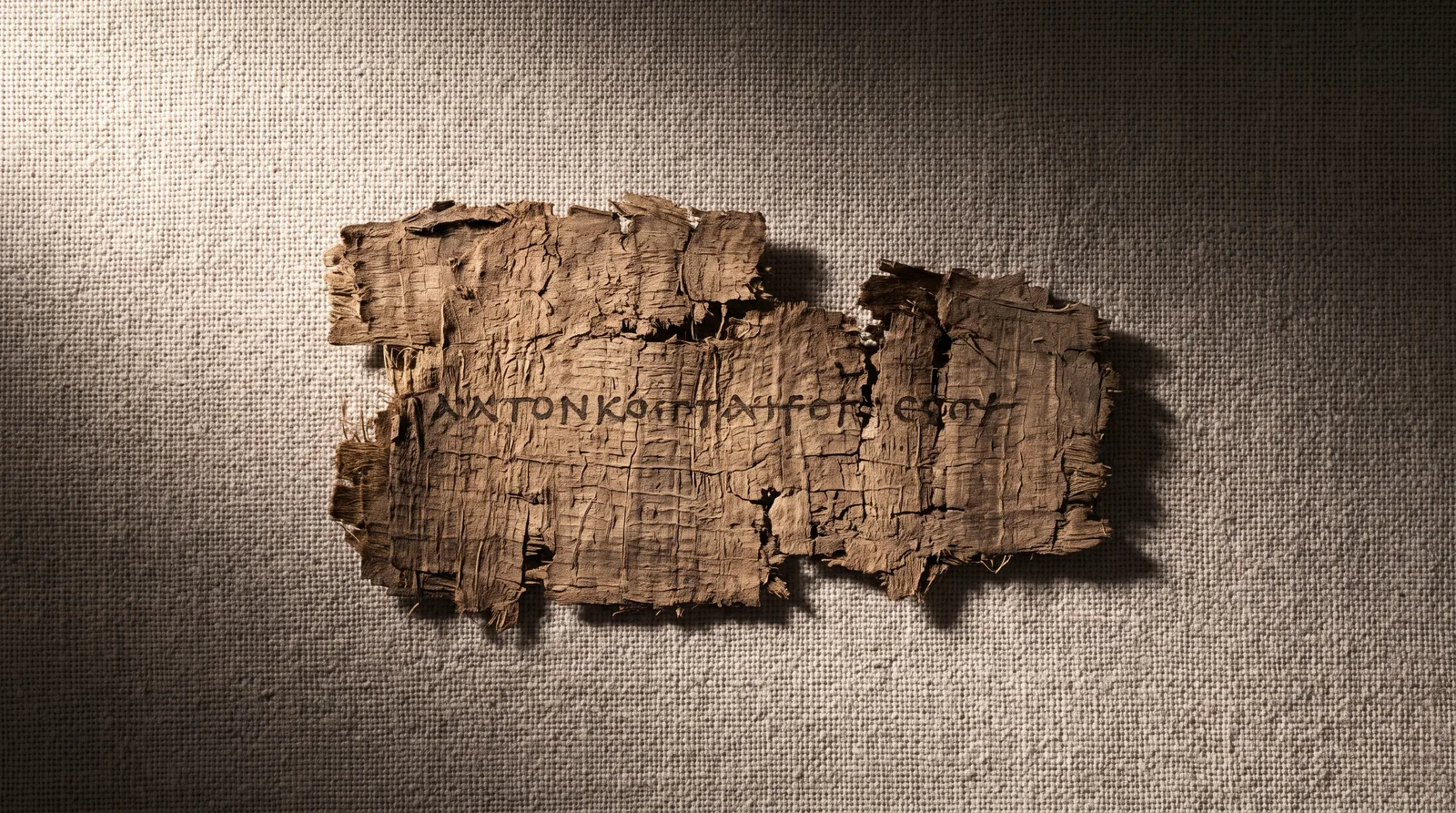
Koine Greek (from the Greek word κοινή, meaning "common") is the dialect that emerged after Alexander the Great's conquests in the fourth century BC spread Greek across the ancient Near East, Egypt, and the broader Mediterranean world. As Greek became the lingua franca of an enormous multicultural empire, it simplified and standardized. Regional variations flattened. Highly literary constructions gave way to more accessible syntax. Vocabulary shifted. By the first century AD, Koine was the everyday, trade-route, street-level Greek that a fisherman in Galilee, a tentmaker in Corinth, and a tax collector in Jericho could all understand.
That is the Greek of the New Testament.
What's Actually Different Between Them?
The differences are real but not chaotic. Think of it less like English vs. Mandarin and more like the gap between Shakespeare and a modern novel — the same basic system, meaningfully evolved.
Here are the most practical distinctions:
Vocabulary. Koine borrows from Classical Greek but also coins new terms, incorporates Semitic influences (especially in the New Testament, where many writers are thinking in Aramaic or Hebrew while writing in Greek), and drops or repurposes words that had become archaic. A Classical Greek dictionary won't always tell you what a Koine word means in its first-century context.
Verb system. Classical Greek has the optative mood appearing frequently in a wide range of constructions. Koine retains the optative but uses it far more sparingly — you'll see it occasionally in Paul's letters ("May it never be!" — μὴ γένοιτο), but it's no longer the workhorse it once was. If you've been drilled heavily on Classical optative usage, you've spent time on something you'll rarely encounter in the New Testament.
Particles. Classical Greek is particle-heavy — those untranslatable little words like μέν, δέ, γάρ, οὖν — and Koine uses them too, but with somewhat less complexity and greater regularity. The good news: learning to track particles in Koine actually prepares you to read New Testament Greek fluidly, because writers like Luke and the author of Hebrews use them with real precision.
Style range. Koine isn't monolithic. The Gospel of Mark is simple, almost paratactic Greek — short clauses, lots of καί ("and"), driving narrative forward. The Epistle to the Hebrews is sophisticated, rhythmic, and closer to literary Koine. Luke and Acts sit somewhere in between, with a conscious elegance. Paul's letters vary by audience and rhetorical purpose. If you're reading the New Testament, you're reading a collection with real stylistic diversity — all within Koine.
Why Starting with Classical Greek Costs You
The core problem isn't that Classical Greek is wrong — it's that it's mismatched. Classical grammar textbooks are built around Classical texts. The vocabulary lists, the example sentences, the reading passages — they're oriented toward Plato and Xenophon. When you finally open your Greek New Testament after six months of that, the language feels related but foreign. You've been training for one sport and now you're playing another.
The better path is to start where your goal actually is. Learn Koine Greek directly — its grammar, its vocabulary, its syntax — using a textbook and approach built for the New Testament. You'll encounter the real text faster, build reading instincts tuned to the right dialect, and spend your study hours on forms and structures you'll actually see on the page.
What About Reading Koine with Depth?
Here's the thing serious students often underestimate: reading Koine Greek well is not a low bar. Moving from vocabulary and morphology into genuine syntactical analysis — understanding how clause structures carry theological weight, how a genitive phrase shapes a doctrine, how aspect in the Greek verb system changes what an author is communicating — that takes real, sustained work. But all of that work pays off in the text you're actually trying to read. Every hour compounds.
If your goal is to open Matthew, Romans, or Revelation and read them on their own terms — not through a translation, not at arm's length — then Koine is your language, and there is no detour worth taking first.
Start there. Build there. The text will meet you there.