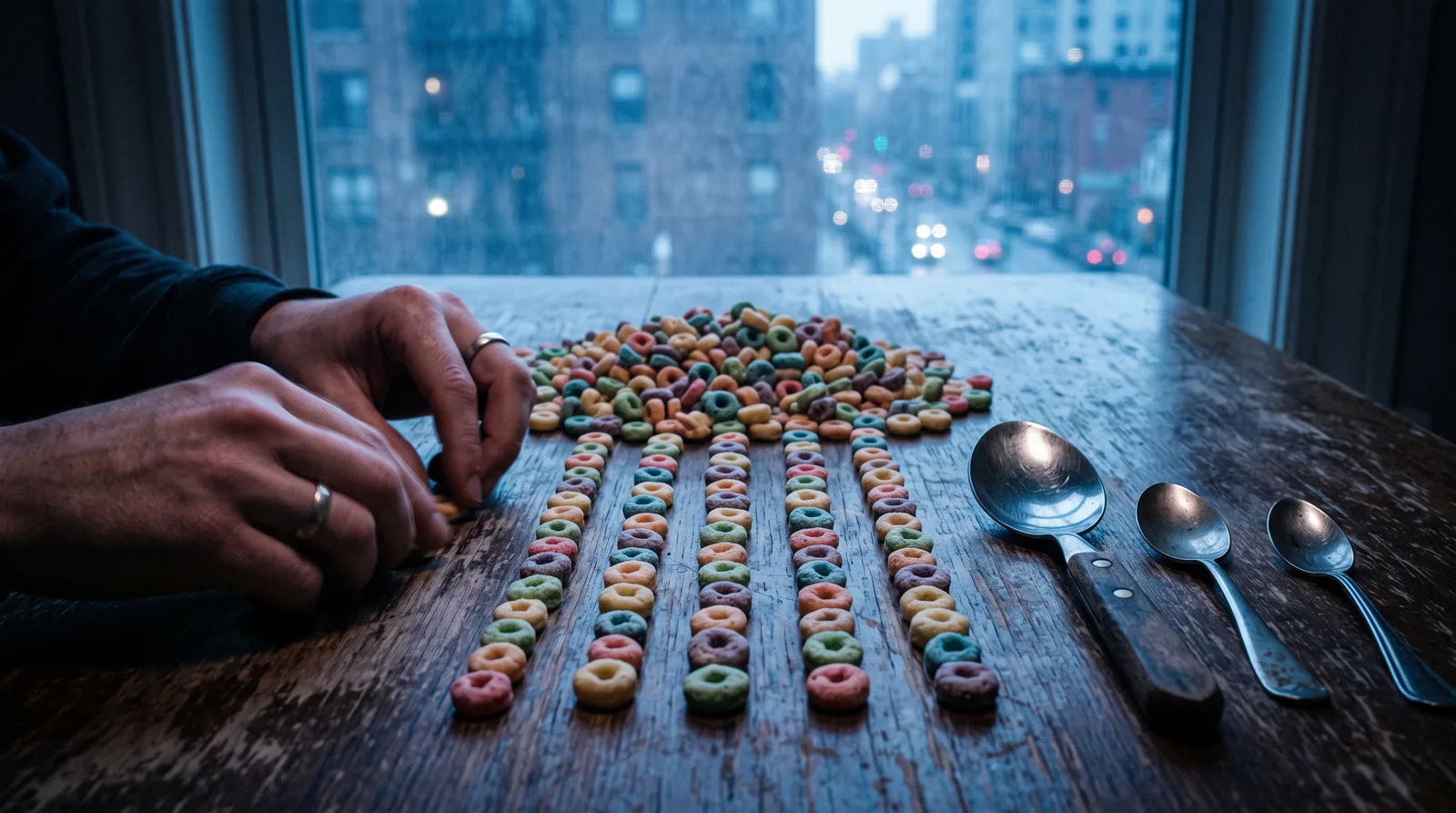
Your kitchen is already a math classroom. The measuring cups stacked by the stove, the wooden spoons in the crock by the sink, the cereal pieces your child inevitably spills on the table — all of it is counting material waiting to be used. Here's how to turn an ordinary morning into a genuine number sense lesson, no worksheets required.
Why Household Objects Work Better Than Flashcards
When a child counts a real spoon, they pick it up, move it, feel its weight, and hear it clink. That physical experience anchors the number in their body, not just their memory. Flashcards show a symbol; a spoon is the thing. Young children between ages 5 and 7 are still in a deeply tactile stage of learning — they need to touch the math before they can trust it.
The other advantage is zero pressure. A kitchen table doesn't feel like a test. When counting feels like play, children take risks, try again, and stay curious.
The One-to-One Rule (and How to Practice It Right Now)
The single most important early counting skill is one-to-one correspondence — understanding that each object gets exactly one count, and each count belongs to exactly one object. Many children can say "one, two, three, four, five" perfectly and still not have this locked in. Here's a quick check:
- Put five spoons on the table in a messy pile.
- Ask your child to count them by moving each one to a separate spot as they say each number.
- Watch whether they touch one spoon per number, or rush through the words without matching.
If the count and the touches don't line up, that's not a problem — that's exactly what you're here to practice. Just slow it down together. "Let's count and move — one… two… three." The moving is the lesson.
Three Kitchen Counting Games to Try This Week
1. The Cereal Count
Pour a small handful of cereal (Cheerios work perfectly) onto a placemat. Ask your child to count out a specific number into a bowl — "Can you get me seven?" Then eat the evidence. Repeat. This naturally builds counting, stopping at a target number, and the very beginning of subtraction ("You had seven, you ate three — how many are left in the bowl?").
2. The Spoon Sort
Pull out an assortment of spoons — teaspoons, tablespoons, a big serving spoon. Ask your child to sort them by size, then count each group. Introduce the language naturally: "You have two big spoons and four small ones. How many spoons altogether?" Don't rush to the answer. Let the pause breathe.
3. The Cup Tower Challenge
Stack plastic cups, counting out loud together as each cup goes on. "One… two… three…" When the tower falls (and it will fall, gloriously), count the scattered cups on the floor. Same number. That's a math insight — quantity doesn't change when the arrangement changes. Mathematicians call it conservation of number. Your child will just call it fun.
The Language You Use Matters as Much as the Activity
Numbers live in words before they live in symbols. While you play, sprinkle in this vocabulary naturally:
- More / fewer — "Which pile has more?"
- Before / after — "What number comes after four?"
- Equal — "Let's make your pile equal to mine."
You're not drilling; you're narrating. Think of yourself as a sports commentator for the counting game happening right in front of you.
When to Stop
Five minutes is enough. Ten is plenty. The moment your child starts fidgeting or looking away, the lesson is over — and that's fine. Short, joyful, and repeated across many mornings is worth infinitely more than one long sit-down session. Consistency beats intensity every time with young learners.
What Comes Next
Once your child can reliably count out ten objects and stop at a given number, they're ready to start exploring how numbers relate to each other — what's one more, one less, which group is bigger. That's where real number sense starts to bloom, and it happens faster than you'd expect when the foundation is solid.
If you want a structured, step-by-step way to keep that momentum going — with games, visual tools, and zero worksheets — my course The Number Detective was built exactly for this stage. Children ages 5–7 use everyday household items as their counting tools, just like we did here, but with a full adventure sequence guiding them forward lesson by lesson. Come take a look when you're ready.