What Is a Business Model — And Why "I Have a Great Idea" Is Not One
Val (Valdas) Samonis · August 14, 2026 · 4 min read
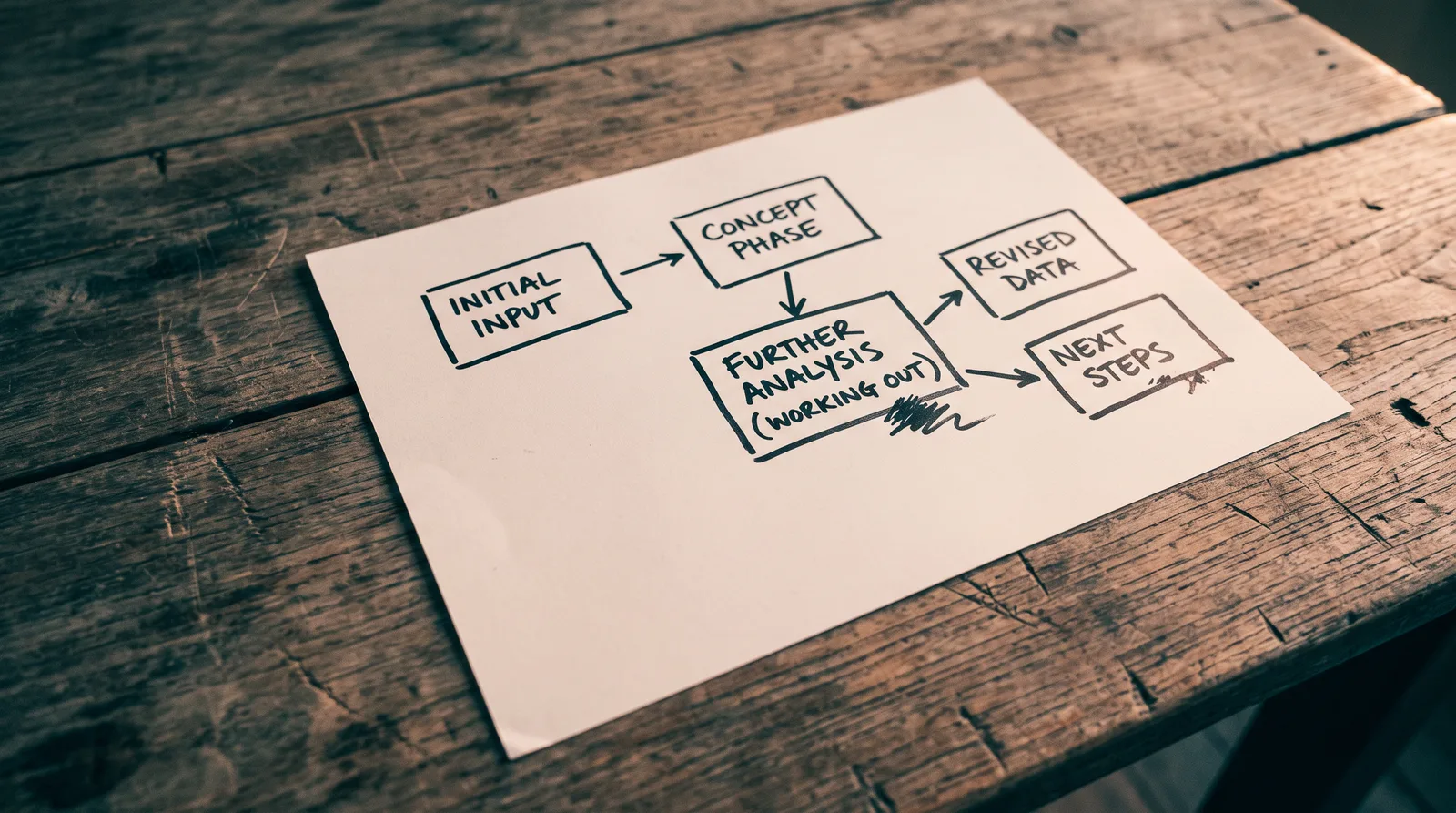
Every week, someone tells me they have a great idea for a business. And I believe them — the idea usually is interesting. The problem is what comes next: a long pause, or a vague wave of the hand, when I ask, "So how does it actually work as a business?"
An idea is a spark. A business model is the engine. You need both, but only one of them pays the bills.
The Definition That Actually Matters
A business model is the system that describes how your venture creates value, delivers that value, and captures a portion of it as revenue.
Those three verbs are doing serious work, so let's slow down on each one.
- Creates value means you solve a real problem, reduce a genuine pain, or fulfill a meaningful desire for a specific group of people. Not everyone. Someone.
- Delivers value means you have a mechanism — a product, a service, a platform, a process — that actually gets that solution into the customer's hands.
- Captures value means money flows back to you in a sustainable way. Free is a strategy, but "free forever with no plan" is a wish.
If you can describe all three in plain English, you have the skeleton of a business model. If you can only describe one of them, you have an idea.
The Most Common Gap I See
Most early-stage founders nail the creation side. They know the problem deeply, they're passionate about the solution, and they can talk about it for hours. Where things fall apart is at delivery and capture.
Ask yourself honestly:
- Who, exactly, is my customer? (Not "anyone who needs this" — that is not a customer.)
- How does the solution physically or digitally reach them?
- Why do they pay me instead of doing nothing, using a free alternative, or hiring a competitor?
- What do they pay — a one-time fee, a subscription, a commission, a license?
- What does it cost me to serve one more customer, and does the math hold up?
These aren't trick questions. They are the questions. If they feel uncomfortable, that discomfort is information — it's pointing directly at the part of your model that needs work before you invest another dollar or another hour.
A Simple Map You Can Use Right Now
You don't need a 40-slide deck to test your business model. Start with a single page and fill in five boxes:
- Customer Segment — Describe one specific type of person or organization you serve first.
- Value Proposition — State, in one sentence, what you do for them and why it matters.
- Revenue Stream — Name the mechanism through which they pay you and approximately how much.
- Key Activities — List the two or three things you must do well for this to work.
- Cost Structure — Identify your biggest costs and confirm that revenue can realistically exceed them.
If you cannot fill in all five boxes with concrete, specific answers, you don't yet have a business model — you have a hypothesis. That's fine! Hypotheses are where every business starts. But the goal is to test and sharpen each box until the system holds together under scrutiny.
Why This Is the Honest Foundation
Here's what I find myself saying often: the market doesn't reward ideas; it rewards execution of a working system. The discipline of mapping your business model early forces you to confront reality before reality confronts you — before you've spent $15,000 on a website, three months building features nobody wanted, or your entire professional network on a launch that wasn't ready.
This is the core of what I teach in Launch On Your Terms — that timing, structure, and self-awareness are not optional luxuries you add once the idea is "good enough." They are the conditions under which good ideas actually survive contact with the real world.
The Real Question to Sit With
Before you move another step forward on your venture, ask yourself this: Can I draw a simple diagram showing how value flows from me to my customer and how money flows back?
If the answer is yes, you're building a business. If the answer is no — or not yet — you know exactly what to work on next.
That's not a setback. That's the work. And the founders who do that work early are the ones who launch on their own terms, not on the terms of a crisis.