Is Old English Really That Hard? 5 Myths Beginners Believe (And the Truth)
Carla Paton · July 28, 2026 · 4 min read
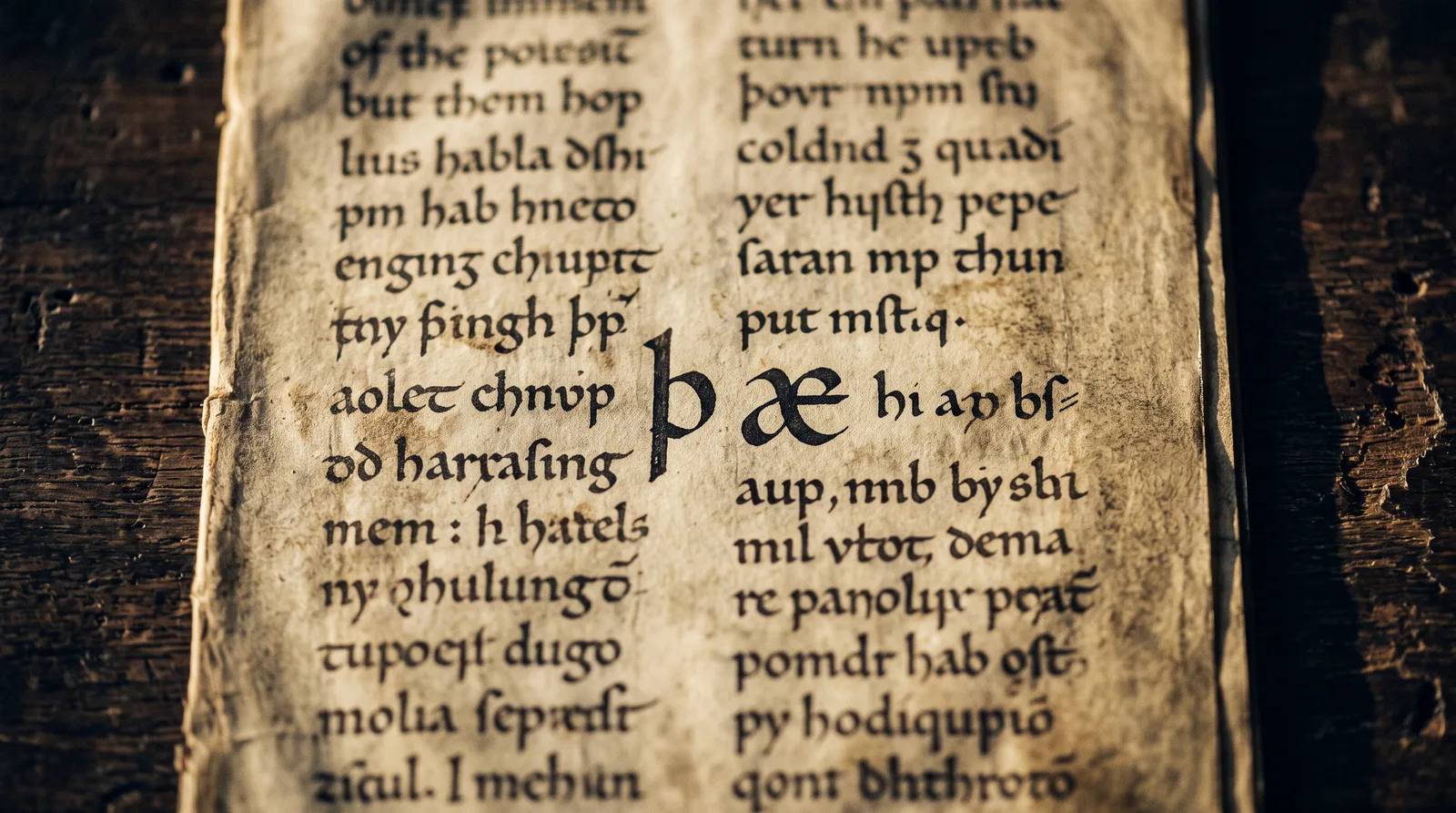
Pick up a copy of Beowulf in the original and flip to the first line — Hwæt! We Gardena in geardagum — and your brain will probably do one of two things: light up with curiosity, or slam the door and walk away. Most people walk away, convinced before they've started that Old English belongs to a locked room marked "linguistics PhDs only."
I want to bust that door open. Because in my experience teaching this language, the hardest part isn't the grammar or the vocabulary. It's the myths beginners carry in before they ever read a single word.
Here are five of the biggest — and the truth behind each one.
Myth 1: Old English Is a Foreign Language
Old English looks foreign on the page, but it is the direct ancestor of the language you're reading right now. That word hwæt at the start of Beowulf? It's our word "what" — used here as an attention-grabber, like "Listen!" or "Hey!" The word cyning is "king." Hūs is "house." Mōna is "moon." Fisc is "fish."
Somewhere between 30 and 50 percent of Old English core vocabulary has direct, recognizable descendants in modern English. You are not learning from zero. You are learning to hear an accent in your own mother tongue.
Myth 2: You Need a Linguistics Degree to Understand the Grammar
Old English is an inflected language, which means nouns and adjectives change their endings depending on how they're used in a sentence. This sounds intimidating — and yes, there are tables to learn. But here's the secret nobody tells beginners: those patterns are regular. Strikingly, almost stubbornly regular.
Modern English grammar is, in many ways, far messier. We have irregular plurals (goose/geese, mouse/mice), phrasal verbs that make no logical sense (why do we "look up" an answer?), and spelling rules with more exceptions than rules. Old English declension tables follow predictable patterns. Once you've learned a noun class, you've learned it. The grammar rewards patience in a way that modern English often doesn't.
Myth 3: You Have to Memorize Everything Before You Can Read Anything
A lot of people assume they need to master all the grammar tables and vocabulary lists first, then attempt actual texts. This is exactly backwards — and it's the approach most likely to make you quit.
The better way is to start reading real Old English sentences almost immediately, even if you need a gloss beside every word. Meaning sticks when it's embedded in context. When you've translated se cyning rīdþ ("the king rides") three times in an actual passage, you remember cyning and rīdþ in a way no flashcard can match. Grammar rules make sense when you've already felt them working in a sentence.
Myth 4: The Alphabet Is Impossibly Weird
Old English uses a few letters you won't recognize: þ (thorn) and ð (eth), both of which make the "th" sound. There's also æ (ash), which makes a short "a" sound like the vowel in "cat." That's essentially the full list of unfamiliar characters.
You can learn all three in about ten minutes. Seriously. After that, Old English is written in the Roman alphabet just like modern English — and the spelling is actually more phonetic than ours. Old English scribes spelled things the way they sounded. There are no silent letters playing tricks on you.
Myth 5: You'll Never Be Able to Read the Real Texts
This one is the most damaging myth because it convinces people to stop before they've started. The truth is that Beowulf, the Anglo-Saxon Chronicle, the elegies like The Wanderer and The Seafarer — these are not locked behind years of study. With guided instruction and the right scaffolding, beginners can start engaging with authentic Old English prose within weeks, and poetry within months.
The first time you read a line of Beowulf and feel its meaning open up — the alliteration landing, the kennings clicking into place — it is genuinely one of the most rewarding experiences a reader of literature can have. Not because it's hard. Because it's yours. Because you did it.
So Where Do You Start?
Start with the sounds. Get comfortable with the alphabet characters. Then learn the personal pronouns and the present-tense verb endings — a small set that unlocks an enormous amount of reading. From there, move into short, simple prose passages before tackling poetry.
The key is to keep real texts in front of you from the beginning. Old English is a language, not an obstacle course. It was spoken by farmers and monks and warriors and queens. It can be learned by you.
If you want a guided path through all of this — alphabet, grammar, authentic readings — my course Reading Old English takes you from the very first letter to translating real Anglo-Saxon texts, no prior experience required. But wherever you start, just start. Hwæt.