What Happens at an End-of-Life Doula Visit? A First-Timer's Guide
Gary R Uremovich MS DMin PhD PA (Emeritus) · August 4, 2026 · 5 min read
If someone in your life is approaching the end of their days, you may have heard the term end-of-life doula and wondered: what do they actually do when they show up? Do they bring equipment? Do they talk to the dying person directly? What if no one knows what to say?
These are completely natural questions — and they deserve a straight answer. So let me walk you through a realistic first doula visit, from the moment you ring the doorbell to the moment you say goodbye. Understanding what this looks like in practice is the first step toward either welcoming a doula into your family's experience or becoming one yourself.
Before You Arrive: The Groundwork That Makes Everything Easier
A skilled doula never walks into a first visit cold. In the days before, you'll have had at least one phone or video call with a family member — often the primary caregiver — to learn the basics: the person's name and diagnosis, how much they know about their prognosis, what the family dynamic looks like, and whether there are any cultural, religious, or personal preferences that should shape your approach.
You're not collecting a medical history. You're gathering context. There's a big difference.
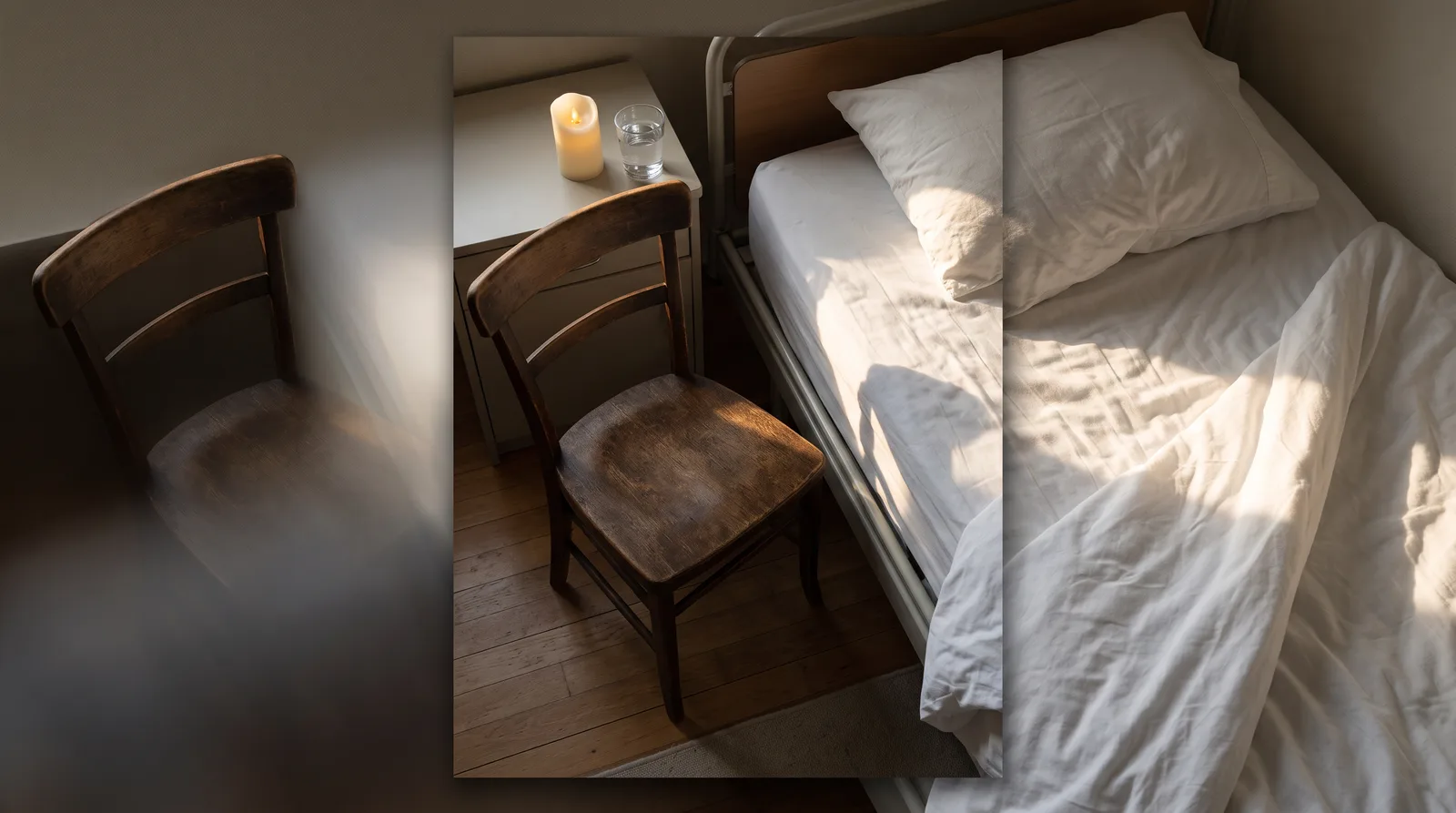
Come with an open bag and an even more open mind. Practically speaking, bring a small notebook, a few items that help you create a calm atmosphere if the family welcomes it (a battery candle, a soft playlist on your phone), and absolutely nothing that signals clinical authority — no lanyards, no clipboards, no medical-looking cases. Your presence is the tool.
Arriving: Read the Room Before You Say a Word
When the door opens, pause before you step fully inside. Notice the energy. Is the caregiver exhausted and brittle? Relieved to see you? Guarded? Your first job is to attune — to match the emotional temperature of the space rather than impose your own agenda on it.
Greet the family member warmly and briefly. Let them lead you in. Ask a simple orienting question: "How has today been for her?" or "Is he awake right now?" This signals immediately that your attention belongs to their loved one, not to any checklist of yours.
The First Meeting with the Dying Person
If the person is conscious and alert enough to receive a visitor, the introduction matters enormously. Keep it quiet, unhurried, and at their eye level — sit or kneel rather than stand over them. Use their name. Introduce yourself plainly: "My name is [name]. I'm here to spend some time with you and your family."
You do not need to explain what a doula is unless they ask. You do not need to announce any agenda. What the dying person often needs more than anything in those first minutes is simply to feel that you are not afraid of them — that their situation has not made you uncomfortable, that you can sit in that room and be fully present without flinching.
Silence is not failure. A hand resting gently near theirs (follow their cues before touching), a calm face, steady eye contact — these communicate more than any carefully rehearsed speech.
The Middle of the Visit: What You're Actually Doing
Once rapport has settled in — and this can happen in ten minutes or take most of the visit — your role shifts into a kind of active witnessing. You might:
- Invite the person to share a memory or story, if they have the energy. "Is there somewhere you've lived that you really loved?" opens more than "Tell me about your life."
- Gently explore any unfinished emotional business only if the person leads there. You follow; you never push.
- Support the caregiver, who may need to step out of the room for the first time in days just because you are there. That relief is not a small thing.
- Notice the physical environment and suggest small adjustments — a window cracked, the TV off, a different pillow position — only if invited to do so.
What you are not doing: diagnosing, advising on medications, making promises about what death will look like, or managing anyone's grief on a timeline.
The Goodbye: Closing With Care
As the visit winds down, give it a real ending — don't just drift out. Return briefly to the dying person, even if they've fallen asleep: a quiet word or simply a moment of stillness acknowledges that this mattered. Then find the caregiver and check in directly: "How are you doing right now?" That question, asked with genuine attention, is often the most important one of the whole visit.
Before you leave, confirm next steps clearly — when you'll return, how they can reach you, anything they mentioned needing. Keep it simple and concrete. Families under this kind of stress do not retain long lists.
What a Doula Visit Is Not
It is not therapy. It is not hospice nursing. It is not a religious service (unless that's specifically what the family has asked for and you are equipped to offer). It is not grief counseling.
It is presence with purpose — showing up with enough training, enough self-awareness, and enough genuine care that a family feels less alone in one of the hardest passages of human life.
That is the work. And it is work worth learning to do well.
If you want to go deeper — the conversations, the vigil, the legacy projects, the caregiver support, the ethical questions, and everything in between — that's exactly what The Death Doula school is built for. You're more ready than you think.