
5 Common PSLE Oral Mistakes Singapore Students Make (And How to Fix Them Before Exam Day)
Tuition on Demand Academy · July 26, 2026 · 4 min read
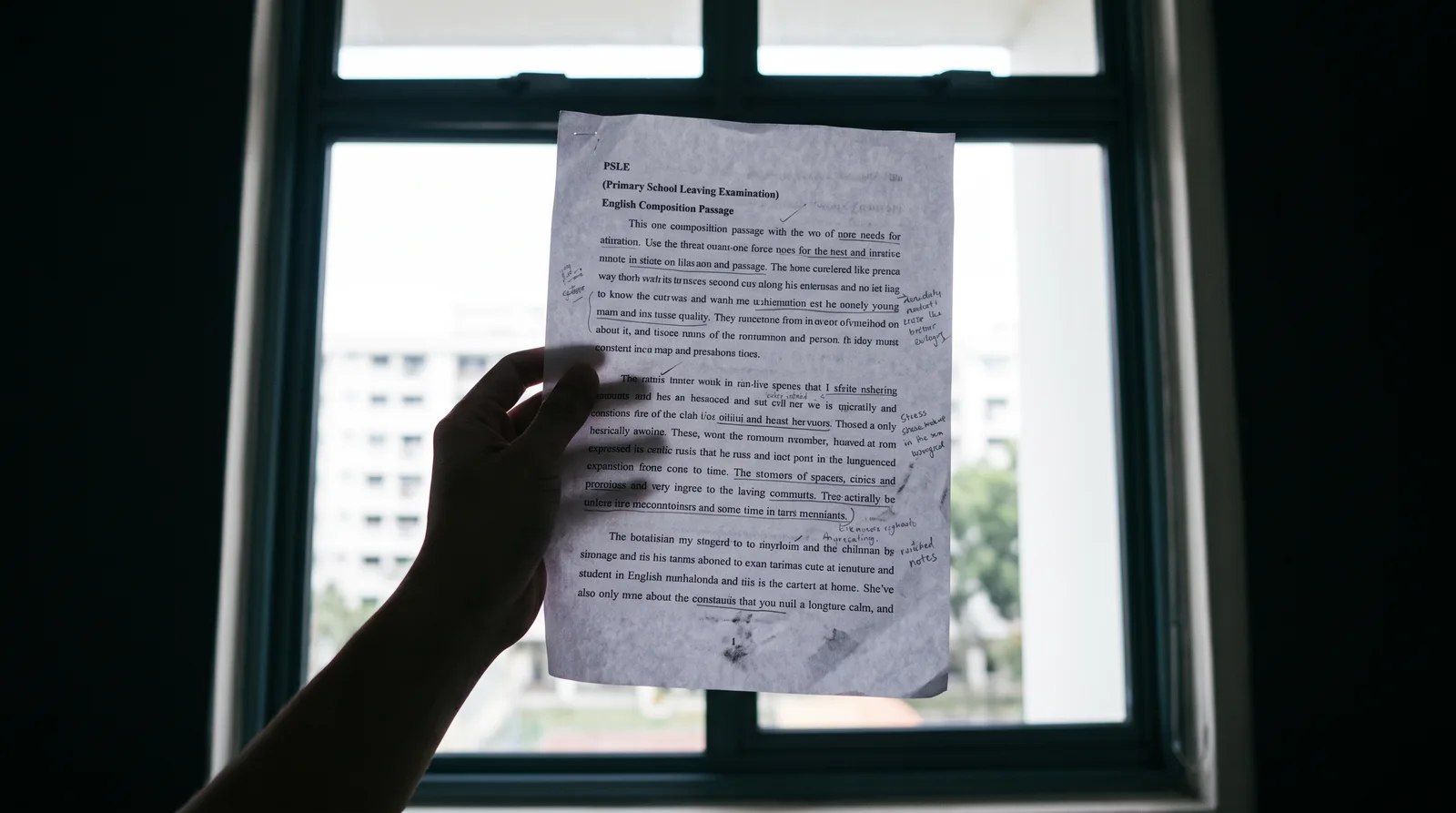
The PSLE English Oral examination is worth 15 marks, and most Primary 5 and 6 students treat it as the component they will "just wing on the day." That mindset is expensive. Reading Aloud and Stimulus-Based Conversation both reward very specific, trainable skills — and they punish very specific, trainable habits. The good news: the mistakes below follow a clear pattern. Fix them now, and you walk into that examination room with a genuine edge.
Mistake 1: Flat, Robotic Intonation in Reading Aloud
The single most common Reading Aloud error is treating every sentence the same way — same pitch, same speed, same energy from the first word to the full stop. Examiners listen for expressiveness, and a monotone delivery signals that the student is decoding words rather than communicating meaning.
The fix: Before reading a passage aloud, spend 60 seconds doing what I call a "meaning scan." Ask: Where is the emotional peak of this paragraph? Which word carries the most weight? Mark those words lightly in pencil, then consciously raise your pitch or slow down on them. Practise the passage three times — once at normal pace, once at 80% speed (this forces you to hear the phrasing), and once at full expression. You will be surprised how quickly intonation becomes instinctive.
Mistake 2: Ignoring Punctuation as a Performance Script
Commas, dashes, ellipses, and exclamation marks are not decoration — they are stage directions. Students who read through a comma without pausing, or rush past an exclamation mark without any lift in energy, lose the marks reserved for accurate and natural reading.
The fix: Treat every punctuation mark as an instruction:
- Comma → breathe slightly, hold the thought
- Exclamation mark → lift your chin, raise volume or pitch
- Ellipsis (…) → slow down, add suspense
- Dash → sharp pause, like a surprise is coming
Read the passage once, whispering those instructions aloud at each mark. It feels odd for about two minutes, then clicks permanently.
Mistake 3: Vague Opinions in Stimulus-Based Conversation
When the examiner shows a stimulus image and asks, "Do you think children spend too much time on screens?" the weakest answer is: "I think yes, because it is not good for them." That answer earns minimal credit. It restates the question and offers zero reasoning.
The fix: Use the PEE frame — Point, Explain, Example — but apply it conversationally, not like an essay:
- Point: State your view clearly. "I think some screen time can be useful, but too much is harmful."
- Explain: Give one real reason. "When children spend hours on games or videos, they miss out on physical activity and face-to-face friendships."
- Example: Make it concrete. "For instance, a child who watches three hours of YouTube a day has very little time left for outdoor play or family conversations."
This takes about 30 seconds to say aloud and immediately sounds like a thoughtful, structured speaker.
Mistake 4: Describing the Image Instead of Discussing It
Stimulus-Based Conversation is not a "describe what you see" exercise — it is a discussion. Yet many students spend their entire answer listing objects in the picture: "I can see a park. There are children playing. There is also a bench." Description alone scores in the lower band.
The fix: Use the image as a launchpad, not a destination. Spend one sentence acknowledging the image ("This picture shows children at a playground"), then pivot immediately to the issue it raises ("which makes me think about how important it is for children to have unstructured outdoor time"). From that point, your answer lives in the world of ideas, and that is exactly where the higher marks are.
Mistake 5: Trailing Off at the End of Sentences
Confidence markers matter. Students often start a sentence with good energy, then mumble the final few words — especially the ones that carry the key information. This happens under nervousness, but the examiner hears it as uncertainty.
The fix: Record yourself on your phone answering one practice question. Play it back and count how many sentences fade out in the last three words. Then do the exercise again, this time pressing slightly harder on the final word of each sentence. It sounds unnatural in isolation, but on playback it sounds clear, assured, and examiner-ready.
A Final Word Before You Start Drilling
These five mistakes are not signs of a weak student — they are signs of an under-practised one. Every single fix above can be drilled in under ten minutes a day. The key is doing that drilling against real passage formats and real stimulus images, not generic ones, because the PSLE has a very specific register and rhythm that only familiarity can unlock.
If you want that familiarity built in — with model answers, AI feedback on your spoken responses, and live tutor Q&A when you get stuck — that is exactly what PSLE English Ace at Tuition on Demand Academy is designed for. Two years of scaffolded practice, built around the real paper. Start where your child is; arrive where the exam needs them to be.