
Continuous Writing vs Situational Writing: Which PSLE Paper 1 Component Should You Focus on First?
Tuition on Demand Academy · July 26, 2026 · 4 min read
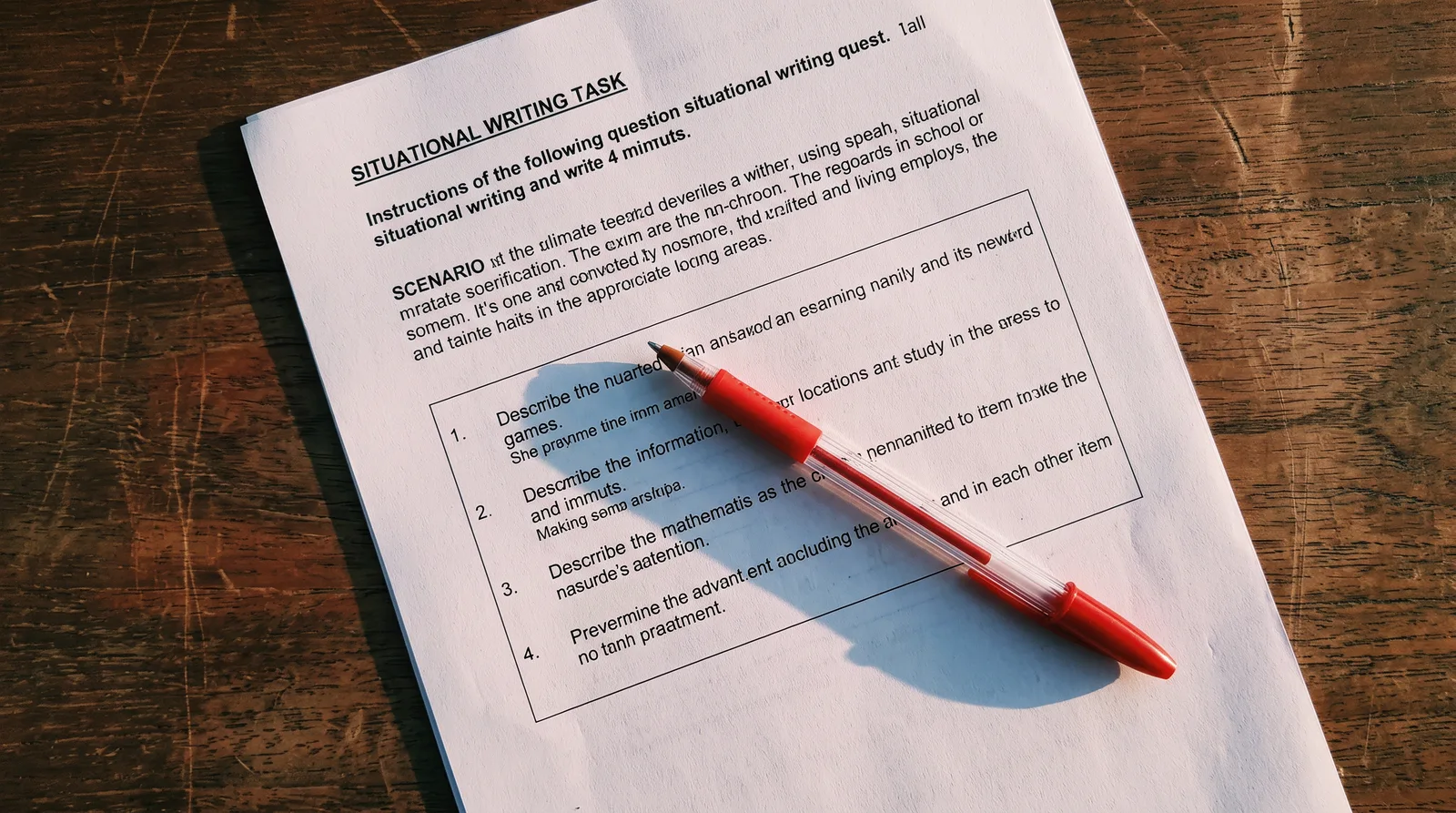
Every Primary 5 or 6 student I've ever spoken to has the same instinct: I need to write a great composition. They spend weekends practising story openings, memorising phrases, and crafting dramatic endings. Meanwhile, Situational Writing sits quietly in the corner of their assessment booklet — practised once, maybe twice — and quietly bleeds marks on exam day.
I want to challenge that instinct directly. If your child is starting Paper 1 preparation now, Situational Writing deserves your first and most deliberate attention. Here's the case for why.
Understanding What Each Component Is Worth
PSLE English Paper 1 is split into two components:
- Situational Writing — 15 marks
- Continuous Writing — 40 marks
At a glance, 40 marks sounds like the obvious priority. But that logic breaks down the moment you look at how reliably each component can be scored.
Composition marks fluctuate. A child who writes beautifully one day can produce a muddled story under exam pressure the next. The mark range for Continuous Writing is wide, and the ceiling is hard to reach consistently. Situational Writing, by contrast, is structured, predictable, and largely rule-driven. Master the rules, and you stop losing marks — full stop.
Why Situational Writing Is More Learnable in Less Time
Situational Writing tests a specific skill: can you produce the right kind of text for the right audience in the right format?
The PSLE typically asks students to write one of a small, recurring set of formats — a formal letter, an email, a speech, a report, a set of notes. Each format has conventions that can be explicitly taught and practised to the point of automaticity.
Here's what that means practically. A formal letter in PSLE Situational Writing requires:
- Your address (right-aligned), followed by the date
- The recipient's address (left-aligned)
- A formal salutation — Dear Mr/Ms [Surname], or Dear Sir/Madam
- A clear subject line or opening purpose statement
- Body paragraphs that address all the bullet-point prompts given in the question
- A formal sign-off — Yours sincerely (if you used a name) or Yours faithfully (if you used Sir/Madam)
Every single one of those elements is checkable before you submit. They are either there or they aren't. That's a fundamentally different kind of challenge from writing a vivid story.
The Bullet-Point Trap That Costs Easy Marks
The most common Situational Writing error isn't poor English — it's incomplete content coverage. The question will give students three to four bullet points they must address. Under time pressure, many students address two confidently, skim a third, and forget the fourth entirely.
Marks for content in Situational Writing are allocated directly to those bullet points. Missing one doesn't just lose a point — it signals a failure to read and respond purposefully, which affects the task achievement score.
The fix is simple and teachable: before writing a single sentence, number the bullet points in the question, then write a matching number next to each paragraph as you plan. After drafting, go back and tick each bullet point off. This two-minute habit alone recovers marks that students don't even know they've been leaving behind.
Tone Shifts Are a Skill, Not an Afterthought
Another area where Situational Writing quietly separates strong students from average ones is register — the level of formality your language carries.
A common task might ask a student to write an email to a principal requesting permission for an event. Many students write the way they'd text a friend. The ideas are there, the content is there, but the language is wrong: "I want to ask if we can…" instead of "I would like to seek your permission to…"
Practising register shifts — learning to move deliberately between formal and informal — is a transferable skill that also lifts the quality of Continuous Writing introductions and conclusions. Time spent here pays dividends in both components.
So When Does Composition Get Its Turn?
Situational Writing first doesn't mean Continuous Writing never. It means you build a reliable floor of marks before you chase the ceiling.
Once your child can handle any Situational Writing format confidently — format correct, all bullet points addressed, tone appropriate — that's the point to shift the bulk of practice energy toward Composition. You'll enter Composition work with stronger discipline around audience awareness and structure, and you'll have removed the anxiety of an unsteady Situational Writing performance from the back of your mind.
Start with What You Can Control
The PSLE rewards students who earn marks efficiently, not just students who write beautifully. Situational Writing is the part of Paper 1 where effort most reliably converts to marks — because it's governed by learnable, checkable rules.
Build that foundation first. Then write the story.
At PSLE English Ace, our Paper 1 programme scaffolds Situational Writing from format mastery all the way through to timed practice under exam conditions — with instant AI feedback on every attempt and live tutor Q&A to catch the gaps before they cost marks. [Explore the programme here.]