

You've seen the ads — someone leaning on a rented Lamborghini explaining that their students make $30k a month teaching anything online. Let's begin by throwing that away, because the honest answer to this page's question is better than the fake one: yes, ordinary people genuinely make money teaching what they know — modestly at first, on purpose, and without being famous. Here's how it actually works.
Who actually pays to learn — and why it's not about fame
People don't buy courses from celebrities. They buy outcomes from someone a few steps ahead of them: the neighbor who actually got her sourdough right, the retired mechanic who can explain a transmission without jargon, the mom who figured out meal planning for a family of six. What they're paying for is compressed time — your years of trial and error, handed over in weeks.
That's why the market keeps absorbing new teachers without "saturating": nobody searches for a course. They search for their problem, taught by someone who's plainly lived it. If your knowledge saves a specific person time, money, pain, or embarrassment, it has buyers. (Fifty concrete examples, if you're unsure yours qualifies.)
How the money mechanically works
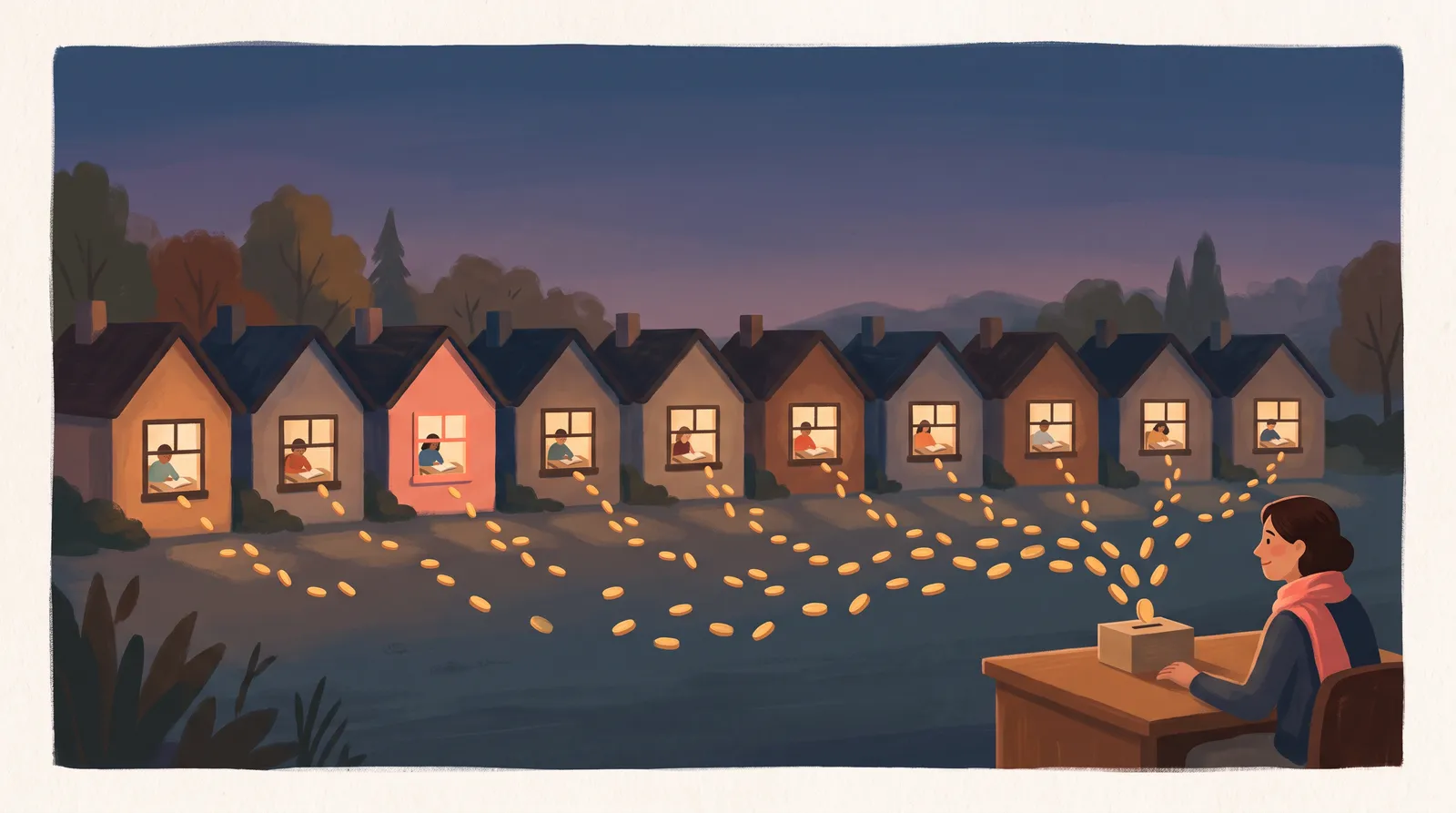
Demystified in one paragraph: you have a school with a page and a price. Someone pays — the platform handles the card, the receipt, the refund policy, the tax paperwork — and your share goes to your PayPal. On TeachClub, a $27/month school with ten subscribed students puts $162 a month in your pocket, every month they stay, and the platform teaches them for you in between. (The full payment math.)
Notice the shape of that number. Ten students is not an influencer outcome — it's a knowable outcome. It's your old coworkers, three people from a Facebook group, a friend's sister, and a few strangers. And at a monthly price, those ten students aren't a payday; they're an income line.
What a realistic beginning looks like
- Week one: an afternoon building and personalizing the school; your first students come from people who already know you — sent personally, with a launch discount as the reason to act now.
- Month one: a handful of students, your first real feedback, the first awkward-then-easier reps of telling people your school exists.
- The milestone that matters: ten students — not a thousand. Ten proves strangers-adjacent people will pay, funds the whole operation many times over, and tells you exactly what to say to the next hundred.
The three things that actually decide it
- A specific promise to a specific person. "Guitar for busy parents — real songs in 15 minutes a day" sells. "Learn guitar" doesn't. Specificity is the whole game, and it's a decision, not a talent.
- Telling people it exists. The most common failure isn't a bad school — it's a secret one. You don't need an audience; you need the three honest paths to your first students.
- Not quitting in week two. The gap between "launched" and "working" is usually measured in weeks of small, boring persistence. Most people quit inside it; the ones who don't inherit the market share of everyone who did.
Read that list again and notice what's missing: talent, credentials, tech skills, youth, luck. Those are the reasons people think they can't do this. The real requirements are a decision, a message, and stubbornness.
What it costs to find out
An afternoon and $27. That's the entire experiment: describe what you teach, look at the school the AI builds, put your price on it, and show it to ten people you know. Either the answer is yes — and you have an income line growing under your name — or it's no, and you spent less than a dinner learning something true about your idea. The knowledge you'd teach is already paid for. It's been sitting in your head for years, earning nothing.