
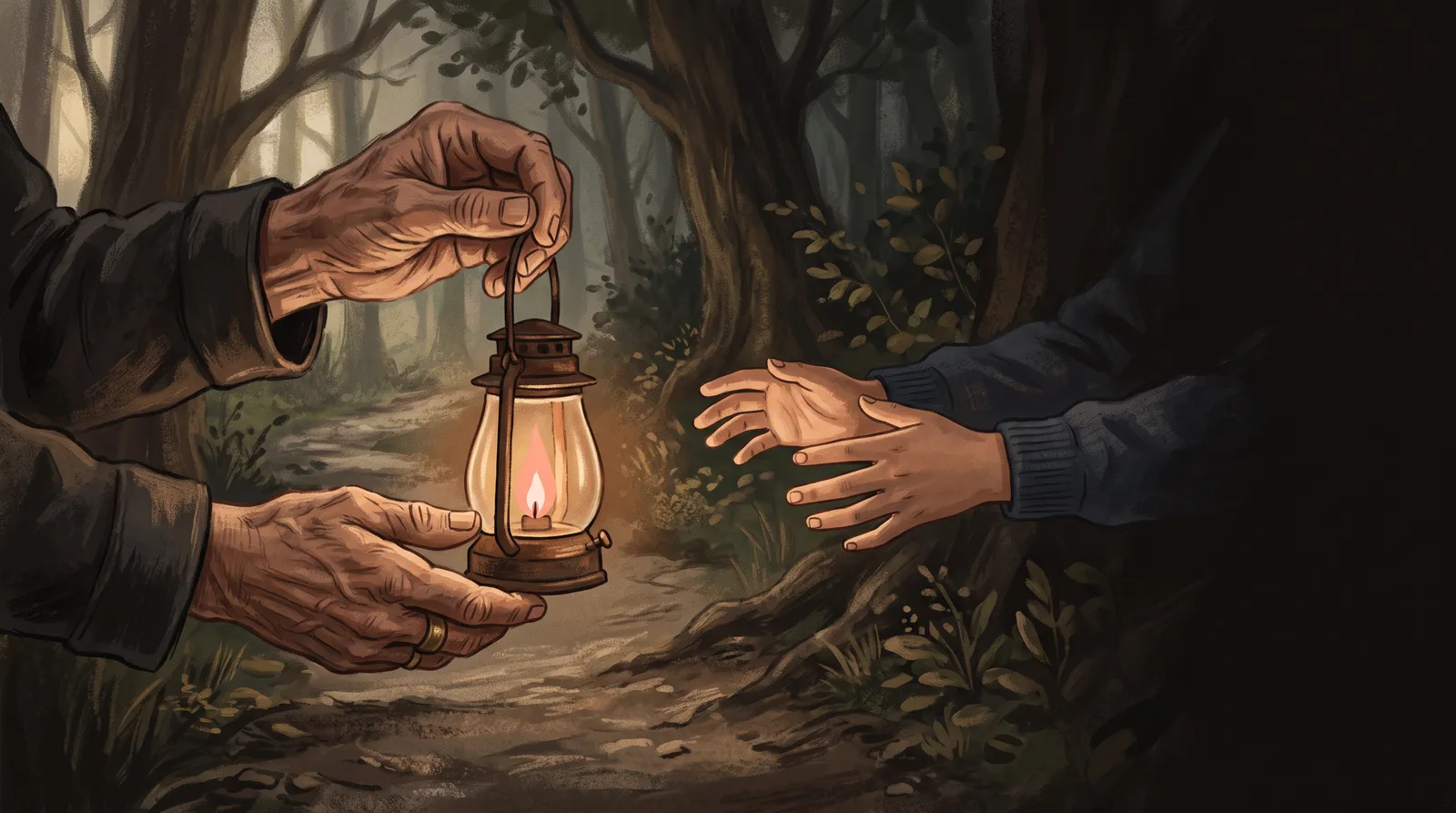
Somewhere between grade school and adulthood, most of us absorbed a rule that was never actually written down: teaching is for the certified. So the guitar player with fifteen years of calluses, the bookkeeper who's rescued a dozen tiny businesses, the grandmother whose sourdough never fails — they all hesitate at the same spot: "who am I to teach this?" Here's the honest, two-part answer.
The legal answer: for most skills, nothing is required
Teaching adults a skill — music, cooking, software, crafts, fitness habits, organization, job hunting — requires no license, no degree, no permission slip. You are allowed to sell your knowledge the same way you're allowed to sell your labor.
The market answer: students don't buy diplomas
Think about the last time you learned something practical — fixed a faucet, chose a camera, got a starter to rise. Did you check the teacher's academic record? You checked whether they'd plainly done the thing and whether they explained it in a way that made sense to you. Your students run the same check on you. What passes it isn't a credential; it's specificity: real numbers, real mistakes, a method with opinions in it.

The one-chapter-ahead principle
Here's the counterintuitive part: for beginners — who are most of every market — the slightly-ahead teacher is often objectively better than the master.
- You remember the confusion. The expert forgot decades ago why bar chords feel impossible; you remember exactly, and you remember what fixed it.
- You speak the student's language. Experts compress knowledge into jargon; near-peers still translate.
- Your path is recent and repeatable. "Here's what I did two years ago, step by step" is more useful than "here's how I'd do it with 30 years of instincts you don't have."
The bar is not mastery. The bar is: you can take someone from where they are to where you've been, faster than they'd get there alone. If that's true, you're qualified — by the only exam the market gives.
Day-one credibility, without testimonials
Every teacher starts with zero reviews. What earns trust before students exist:
- Your story, specific. Not "passionate about baking" — "I killed four starters before I understood hydration; my method skips those four funerals."
- Your results, concrete. Songs you play, books you kept, gardens that survived. Yours, not clients'.
- Your promise, narrow. A page that says exactly who it's for and what they'll be able to do reads as competence — specificity is the whole game.
- A free taste. Open a preview lesson; letting the teaching prove itself beats any bio.
On TeachClub, your sales page and its about-the-teacher section are built from what you tell it — so the credibility above is a matter of telling your story honestly, not designing anything. (How the build works.)
The line you shouldn't cross
The permission comes with one rule, and it's the one that protects you: don't claim what isn't yours. No invented credentials, no borrowed results, no "certified" anything you aren't. Not only because it's wrong — but because it's unnecessary. The honest version ("I'm not a professor; I'm the person who figured this out the hard way and can save you the detours") is more persuasive to the students you actually want. Fake authority attracts buyers who expect a professor and refunds when they don't get one.
The bottom line
"Who am I to teach this?" has an answer: you're the person a few steps behind you has been looking for. The degree question was never really about qualifications — it was permission-seeking. Consider it granted. The remaining question is what, exactly, you'll teach — and that one's a pleasure to answer.