
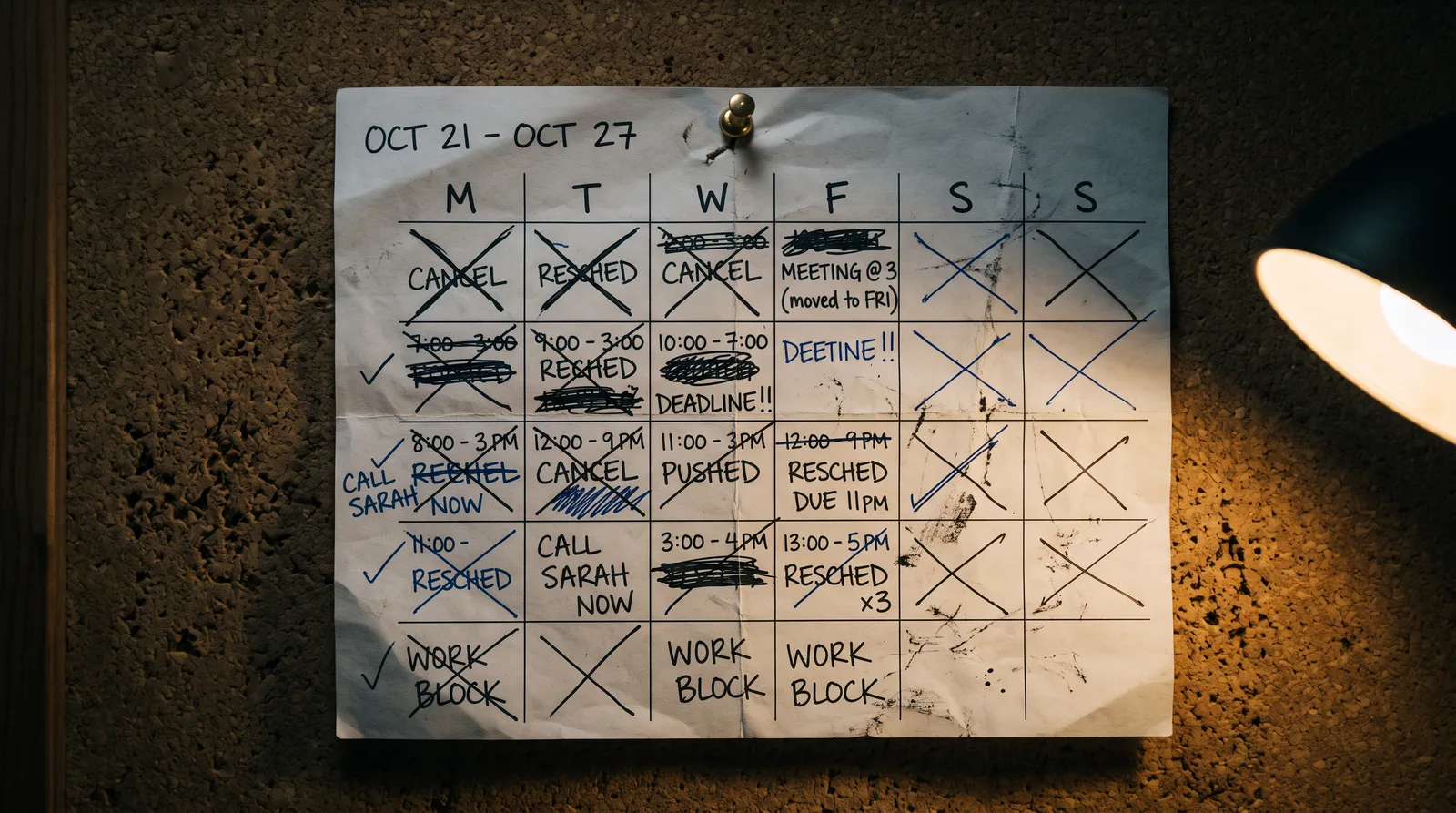
Every August, students sit down with good intentions, write out a color-coded schedule, and follow it for exactly four days. Then life happens — practice runs long, a group chat blows up, one subject takes three times longer than expected — and the whole plan collapses.
Here's the real problem: most study schedule advice is built around adult routines. Adults control their own time. You don't. You have bells, buses, coaches, parents, and a brain that is still literally developing its planning circuits. A schedule that ignores that reality isn't a plan — it's a wish.
This guide walks you through building a weekly study plan that actually holds together, step by step.
Step 1: Do a Honest Time Audit First
Before you schedule a single study block, you need to know what time you actually have. Grab a blank weekly calendar and block out everything that is already committed:
- School hours (including travel)
- Sports, clubs, rehearsals, or jobs
- Family obligations (dinner, chores, religious services)
- Sleep — non-negotiable, minimum 8 hours
What's left is your real available time. For most high schoolers, that's roughly 2–4 hours on school nights and a longer stretch on weekends. Write that number down. This is your actual budget. You can't spend more than you have.
Step 2: Know Your Weekly Subject Load
List every class and ask two questions about each one:
- Does this class assign homework that is due the next day? (daily demand)
- Does this class have big tests, essays, or projects? (weekly/long-term demand)
Math and foreign language typically show up in column one — small, frequent practice. History and English tend to live in column two — less daily, but bigger chunks. Science is often both. Mapping this out prevents the classic mistake of spending Monday night only on tomorrow's homework while a Friday test quietly ambushes you.
Step 3: Build Around Anchor Blocks, Not Perfect Hours
Adult productivity gurus love the idea of a "deep work block" — two uninterrupted hours at the same time every day. That's great if you're a freelance writer. You're a high schooler whose Tuesday afternoon just got eaten by a mandatory assembly.
Instead, use anchor blocks: 2–3 fixed study windows per week that you protect no matter what. These are your heavy-lifting sessions — the time you use for reviewing notes, working on long-term projects, and studying for upcoming tests. Think of them as standing appointments with yourself.
On other days, work with flex blocks — shorter windows (30–45 minutes) where you knock out daily homework and quick reviews. Flex blocks bend around life. Anchor blocks don't.
A realistic example for a student with sports three evenings a week:
| Day | Block | Purpose |
|---|---|---|
| Monday | 7:00–8:30 PM | Anchor — review notes, start long-term work |
| Tuesday | 7:30–8:15 PM | Flex — daily homework only |
| Wednesday | Off (late practice) | — |
| Thursday | 7:00–8:30 PM | Anchor — test prep, essays |
| Friday | 4:00–5:00 PM | Flex — wrap up the week |
| Saturday | 10:00 AM–12:00 PM | Anchor — projects, catch-up, preview next week |
| Sunday | 7:00–7:45 PM | Flex — light review, pack bag |
Notice what this schedule is not: it is not six hours a night. It is consistent, sustainable, and specific.
Step 4: Assign Subjects to Slots — Don't Just "Study"
The single biggest schedule mistake is writing "study" on the calendar and leaving it vague. Vague plans evaporate the moment you sit down and don't know where to start.
Instead, assign each block a subject in advance. Use your subject load map from Step 2 to guide you. Put subjects with upcoming tests in your anchor blocks. Put daily homework in your flex blocks. When Saturday morning arrives, you already know you're opening your history textbook — the decision is already made.
Step 5: Build In a Weekly Reset (15 Minutes, Every Sunday)
Schedules fail because they're treated as permanent. They're not — they're drafts.
Every Sunday, spend 15 minutes doing a quick reset:
- Look at the upcoming week's tests, due dates, and events
- Adjust your anchor and flex blocks if needed
- Move anything that didn't get done last week into a specific slot
This one habit is the difference between a schedule you abandon by October and one you're still using in May.
One Last Thing: Protect Your Schedule From Yourself
The hardest part of any study schedule isn't building it — it's the moment on Thursday at 7:00 PM when you really don't feel like sitting down. That feeling is normal. It doesn't mean the schedule is broken. It means the schedule is working exactly as designed: it's making the decision for you so you don't have to negotiate with yourself every single night.
Start with this framework, run it for two weeks, then adjust. A schedule that's 80% right and actually followed will always beat the perfect plan that lives only on paper.
If you want personalized help building your academic skills and routines alongside a system like this, that's exactly what we do at Neo AI Tutor Academy — fully personalized learning for grades 8–12, built around how your specific week actually works.