
If you're in 6th, 7th, or 8th grade, here's something worth knowing: the students who understand AI now — not in college, not in high school, but right now — are going to have a serious edge over everyone else. Not because AI is magic. But because most people your age are using it without really understanding it, and that gap matters.
This post is your starting point. No jargon, no hype — just the real things you actually need to know.
First, What Actually Is AI?
AI stands for artificial intelligence. At its core, it's software that has been trained on enormous amounts of data — text, images, code, and more — so that it can recognize patterns and generate responses that feel intelligent.
Think of it this way: when you ask an AI chatbot a question, it doesn't think the way you do. It predicts what words or ideas are most likely to be useful based on everything it was trained on. It's incredibly powerful at that task. But it doesn't understand, feel, or reason — it pattern-matches at a massive scale.
That's not a knock against it. That's just the honest picture. And knowing that already puts you ahead of most people using these tools.
The Three Things Every Middle Schooler Should Understand About AI
1. AI Can Be Wrong — Confidently
AI tools can produce answers that sound completely certain and still be factually incorrect. This is sometimes called a "hallucination" — the AI generates something plausible-sounding that simply isn't true.
What this means for you: never submit AI-generated content as fact without checking it. If you use an AI tool to help you research a history project or explain a science concept, treat it like a starting point — then verify the key facts with a textbook, a trusted website, or your teacher.
2. AI Is a Tool, Not a Shortcut
Using AI to skip your homework isn't a learning strategy — it's a trap. The whole point of school is to build your own skills and knowledge. If AI does your thinking for you, you don't grow.
But here's the flip side: using AI to support your learning is genuinely powerful. Ask it to explain a concept a different way. Have it quiz you before a test. Use it to brainstorm ideas for an essay, then write the essay yourself. That's the difference between using AI as a crutch and using it as a coach.
3. What You Put Into AI Matters
The quality of what you get out of an AI tool depends almost entirely on what you put in. This is called prompting — and it's a real skill.
A weak prompt: "Tell me about the Civil War." A stronger prompt: "Explain three economic causes of the American Civil War in simple terms, as if you're teaching a 7th grader who already knows the war was about slavery."
See the difference? The second prompt gives the AI context, a clear task, a format, and a target level. Practice writing specific, detailed prompts and you'll get dramatically better results — in any subject.
A Simple Framework for Using AI Responsibly
Before you use an AI tool for school, run through these three quick questions:
- Is this allowed? Check with your teacher. Many classrooms have specific rules about AI use, and following them is part of being a responsible student.
- Am I still doing the thinking? AI should support your ideas, not replace them. If you couldn't explain what the AI produced in your own words, you haven't actually learned it.
- Have I checked it? Especially for facts, names, dates, and data — verify before you trust.
That's it. Three questions. They'll keep you out of trouble and help you actually get smarter in the process.
Why Starting Now Gives You a Real Head Start
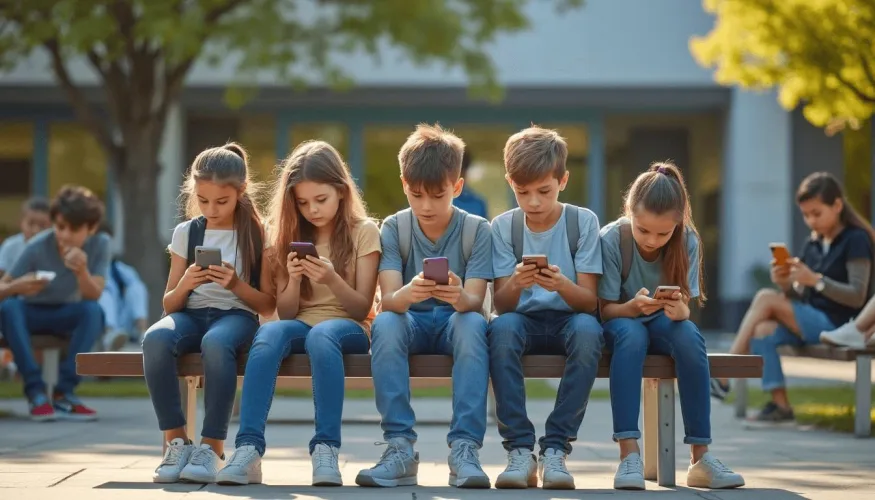
Here's the honest truth: most middle schoolers are either ignoring AI entirely or using it in ways that could actually hurt their grades and their learning. Very few are studying it intentionally.
The students who learn how AI works, how to use it well, and how to think critically about it are going to walk into high school — and eventually into jobs — with a skill set that most adults don't even have yet.
You're not too young to start. You're exactly the right age.
What's Next?
Understanding the basics is step one. The next steps are building study habits that work with AI, learning to evaluate sources in a world flooded with AI-generated content, and developing the executive functioning skills that make all of it stick.
That's exactly what we dig into inside LevelUp Learning Academy — built specifically for 6th, 7th, and 8th graders who want to show up to high school genuinely ready. If this post got you thinking, come take a look at what's waiting for you inside.