Business Case vs. Budget Request: What Government Leaders Get Wrong (And How to Fix It)
TSThe Strategic Vault Academy · August 3, 2026 · 4 min read
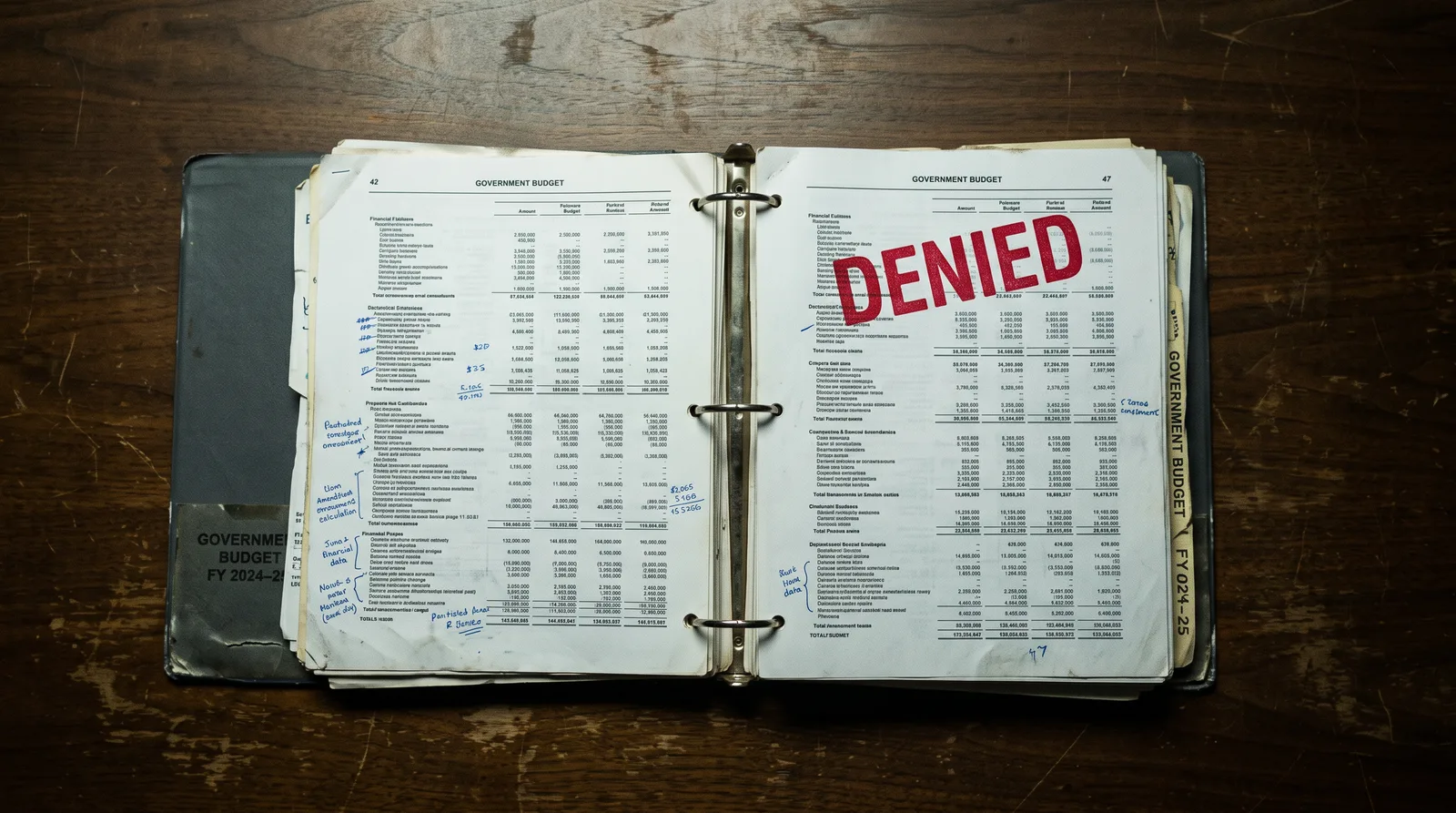
Every year, capable government leaders do the same exhausting thing: they build a spreadsheet, attach a narrative justification, route it through the budget process, and wait. Sometimes the funding comes. More often, it doesn't — and nobody gives them a satisfying reason why.
The problem usually isn't the idea. It's the document.
A budget request and a business case are not the same thing, and confusing them is one of the most expensive mistakes a public sector leader can make.
What a Budget Request Actually Is
A budget request is a financial instrument. It answers one question: How much do you need?
It lives inside the budget cycle. It speaks the language of line items, fiscal years, and appropriations. It assumes the decision-maker already agrees the work is worth doing — it's just asking for the money to do it.
That assumption is almost always wrong.
When you submit a budget request without a business case underneath it, you're essentially asking an executive or a legislative body to take your word for it. In a resource-constrained environment full of competing priorities, that's a losing position.
What a Business Case Actually Is
A business case is a strategic document. It answers a different set of questions:
- What problem are we solving, and why does it matter now?
- What are the consequences of not acting?
- What options did we consider, and why is this the right one?
- What does success look like, and how will we know when we've achieved it?
- What does this cost — and what is the cost of inaction?
Notice that "how much do you need" is in there — but it's the fifth question, not the first. A rigorous business case builds the logic that makes the dollar figure inevitable, rather than arbitrary.
That sequencing is everything.
The Four Elements Most Government Business Cases Are Missing
If you've written what you thought was a business case and still got turned down, check for these gaps:
1. A clearly named problem with operational evidence. Vague language like "improve efficiency" or "modernize our systems" signals that the problem isn't well-understood yet. Decision-makers can't fund a feeling. You need to describe the current state concretely — what breaks, how often, what it costs in time, rework, or risk.
2. A cost-of-inaction analysis. Most public sector business cases argue for the value of doing something. The stronger move is to make visible what it costs to do nothing. What happens to service delivery, compliance posture, or staff capacity if this doesn't get funded? Quantify it where you can; be honest where you can't.
3. Options, not just one path. Presenting a single solution looks like advocacy, not analysis. Present two or three legitimate alternatives — including a "do nothing" or "do minimum" option — with a clear rationale for your recommendation. This signals intellectual rigor and earns credibility with skeptical reviewers.
4. A governance and implementation signal. Executives and legislators have been burned before. They've funded initiatives that disappeared into implementation fog. Your business case should include at least a sketch of how you'll govern the work: who owns it, what the major milestones are, and how you'll report progress. A 30/60/90-day action plan embedded in the document is one of the most underused tools in public sector leadership.
When to Build the Business Case (Hint: Not During Budget Season)
Here's the reframe that changes everything: a business case is not a budget season document. It's a pre-decision document, and the best time to build it is months — sometimes a full fiscal year — before you need the money.
Why? Because a well-constructed business case does something a budget request never can: it shapes how decision-makers think about the problem before they're being asked to fund a solution.
If your Deputy Secretary or your appropriations committee encounters your business case during the budget cycle for the first time, you've already lost the narrative. The goal is to have decision-makers nodding along before budget season opens, because you've been building shared understanding of the problem all along.
That's not lobbying. That's strategic communication — and it's part of what it means to lead at the executive level.
A Simple Structural Test
Before you submit anything, run your document through this three-question test:
- If someone removed the dollar amounts, would the document still make a compelling argument that something needs to change?
- Does the document name a real, specific consequence of inaction?
- Would a senior leader who knows nothing about your program understand — and believe — the problem by page two?
If any answer is no, you have a budget request dressed up as a business case. Go back and close the gap.
The leaders who consistently win resources in the public sector aren't the ones with the biggest asks. They're the ones who've done the analytical work to make approval feel like the obvious choice.
That's a learnable skill — and it starts with knowing which document you're actually building.

Want to go deeper than a blog post?
The Strategic Vault: Mapping the Hidden Factory of Inefficiency
Learn to map work as it actually happens, expose hidden inefficiencies, and build an executive-ready business case for operational improvement — all in one rigorous, applied curriculum.
Start learning — $10 · 30 days access