How to Write a Strategic Plan for a Government Agency (Even If You've Never Done It Before)
TSThe Strategic Vault Academy · August 1, 2026 · 4 min read
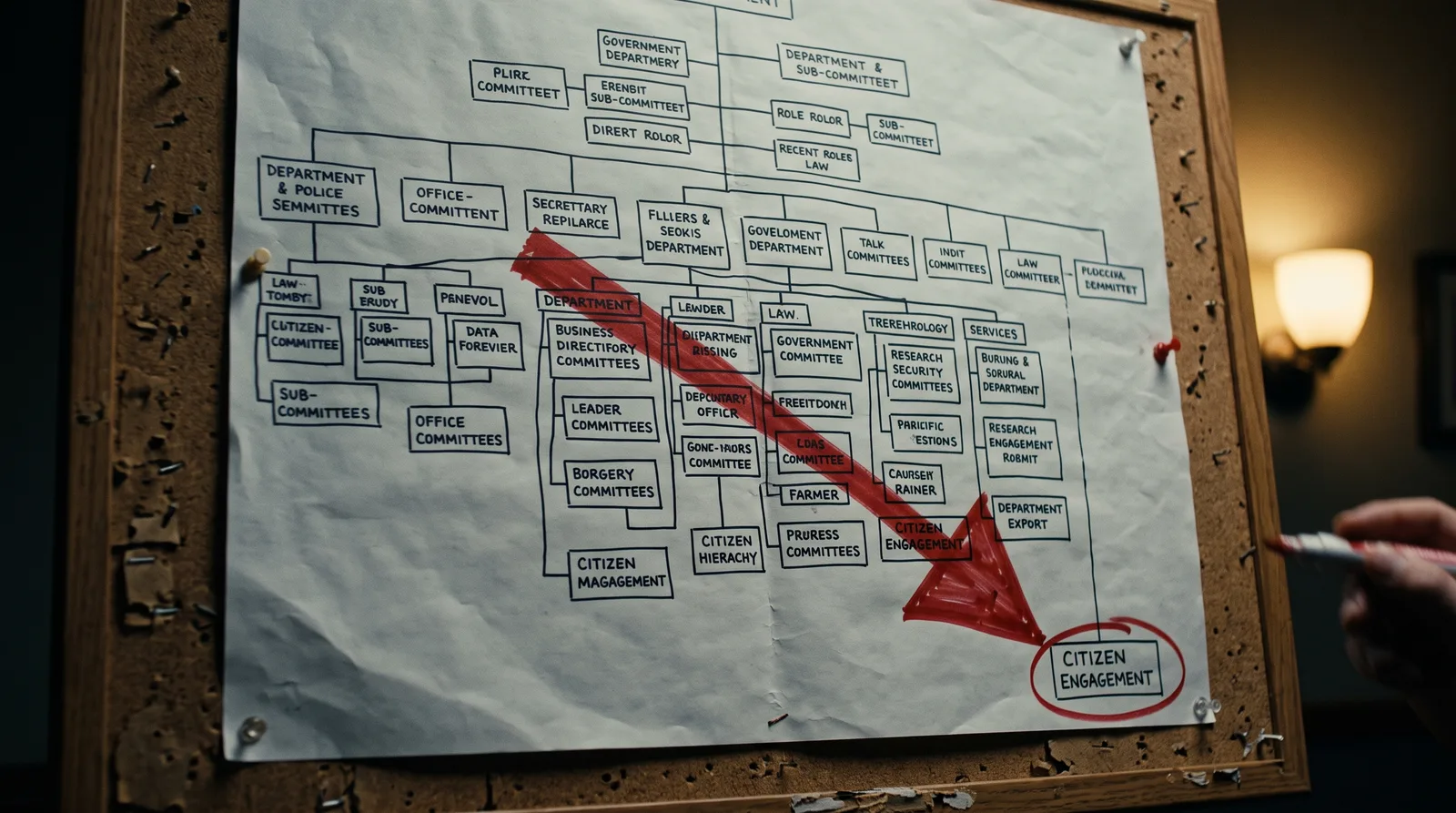
The first time someone hands you a strategic planning mandate, it can feel like being asked to conduct a symphony when you've only ever played in the orchestra. Everyone around you seems to know what they're doing. You don't. And the stakes — public trust, taxpayer dollars, agency credibility — feel enormous.
Here's the truth nobody says out loud: strategic planning is a craft. It has a structure. It has steps. And once you see the architecture clearly, you can build it deliberately — even the first time.
What a Government Strategic Plan Actually Is (And Isn't)
A strategic plan is not a wish list. It's not a report you write to satisfy an oversight requirement and shelve. And it's definitely not a document that describes what your agency already does in slightly more inspirational language.
A real strategic plan closes the gap between where your agency is today and where it needs to be — typically over a three-to-five-year horizon. It answers four hard questions:
- What is our agency fundamentally here to accomplish?
- What conditions or capabilities are preventing us from accomplishing it?
- What must change — and in what priority order?
- How will we know if we're making progress?
Everything else — the mission statement, the goals, the performance metrics — is scaffolding around those four questions.
Step 1: Start With an Honest Environmental Scan
Before you write a single goal, you need a clear picture of where your agency stands. This means looking in two directions at once.
Internally: What are your agency's real operational strengths? Where do workflows break down? Where do decisions stall? What does your workforce capacity actually look like — not on the org chart, but in practice?
Externally: What is the legislative and policy environment signaling? What do the communities you serve actually need right now? What are peer agencies doing that's working?
A structured SWOT analysis (Strengths, Weaknesses, Opportunities, Threats) is the standard tool here, but the quality of that analysis depends entirely on how honestly you populate it. Pull data. Talk to frontline staff. Review audit findings. The scan is only as useful as the candor you bring to it.
Step 2: Draft a Mission Statement That Actually Guides Decisions
Most government mission statements are vague enough to apply to any agency in any state. Yours should be specific enough that a new employee could use it to prioritize their work on day one.
A useful test: if you swapped your agency's name for a different agency's name and the mission statement still fit perfectly, it's too generic. Push for specificity about who you serve, what you provide, and why it matters to the public.
Step 3: Set Strategic Goals — Three to Five, No More
This is where first-time planners most often go wrong. They mistake comprehensiveness for strategy. A list of twelve goals is not a strategy — it's an inventory.
Strategic goals should be high-altitude statements that represent the most critical shifts your agency needs to make. Each goal should be meaningful enough to survive a leadership transition and specific enough to generate disagreement — because if everyone immediately agrees, it's probably not asking enough of the organization.
For each goal, identify one to three supporting objectives: the concrete, measurable outcomes that tell you the goal is being achieved.
Step 4: Build Your Performance Measures Before You Finalize the Goals
Here's a discipline that separates functional strategic plans from decorative ones: if you can't identify at least one meaningful, measurable indicator for a goal, that goal isn't ready yet.
Performance measures in government should capture outcomes, not just outputs. "Number of permits processed" is an output. "Percentage of permit applicants who received a decision within the statutory 30-day window" is an outcome. The distinction matters because outputs can look healthy while the public experience is quietly deteriorating.
Step 5: Translate Strategy Into a 30/60/90-Day Action Plan
A strategic plan without an action plan is a declaration of intent. You need a bridge between the three-to-five-year horizon and the work that starts on Monday.
A 30/60/90-day plan maps the immediate implementation moves: Who owns what? What decisions need to be made in the first month? What quick wins can demonstrate momentum to your team and your stakeholders? What dependencies — budget cycles, legislative calendars, procurement timelines — do you need to account for right now?
This is also where you identify your first audit checkpoints: the early moments where you'll assess whether implementation is tracking against the plan, or whether you need to adjust.
Strategic Planning Is a Skill, Not an Instinct
The leaders who seem to do this effortlessly have almost always done it before — or had a mentor who walked them through it the first time. The process above is learnable, repeatable, and improvable with each iteration.
What you're building isn't just a document. It's a decision-making framework that your entire agency can orient around. Done well, it makes every operational conversation cleaner — because everyone knows what the organization is actually trying to accomplish.
If you want to go deeper on any piece of this — including how to build the business cases, audits, and co-designed artifacts that make a strategic plan stick operationally — that's exactly the work we do inside The Strategic Vault Academy.

Want to go deeper than a blog post?
The Strategic Vault Academy
A nine-module coaching program that helps mid- to senior-level public sector leaders close the gap between strategic intent and operational reality — co-designing real artifacts, audits, and 30/60/90-day action plans along the way.
Start learning — $10 · 30 days access