
The 7 Most Common Wiring Mistakes DIYers Make (and How to Avoid Them)
TMTodd McFarland · July 31, 2026 · 4 min read
Electrical mistakes don't always announce themselves right away. Sometimes a bad connection hides inside a wall for months before it causes a problem — and by then, the consequences can be serious. After working through hundreds of wiring scenarios, I've seen the same errors show up again and again, almost always from well-meaning DIYers who just didn't know what they didn't know.
Let's fix that right now. Here are the seven most common wiring mistakes beginners make, and exactly how to avoid each one.
1. Reversing Hot and Neutral
This is the one that surprises people most, because the device often still works — and that's what makes it dangerous. The hot wire (black) must connect to the brass screw on an outlet; the neutral (white) goes to the silver screw. Flip them, and the device is energized even when switched off. Always use the memory trick: black to brass, white to silver. When in doubt, a simple outlet tester from any hardware store will catch this instantly.
2. Using the Wrong Wire Gauge
Wire gauge and circuit amperage are a matched pair — you can't mix them freely. The two rules to memorize: 14-gauge wire is rated for 15-amp circuits; 12-gauge wire is rated for 20-amp circuits. Running 14-gauge wire on a 20-amp breaker means the breaker won't trip when the wire overheats. That's not a nuisance — that's a fire hazard. Check your breaker rating before you ever pull wire, and buy accordingly.
3. Skipping Pigtails at Outlets and Switches
When two or more wires share a single screw terminal on a device, that's called "stacking," and it's a code violation for good reason. If that connection loosens, everything downstream loses power — or worse, arcs. The correct method is to pigtail: cut a short piece of wire (about 6 inches), join it to the incoming wires with a wire nut, and connect only that single pigtail to the device terminal. One wire per screw, every time.
4. Leaving Too Little Wire in the Box
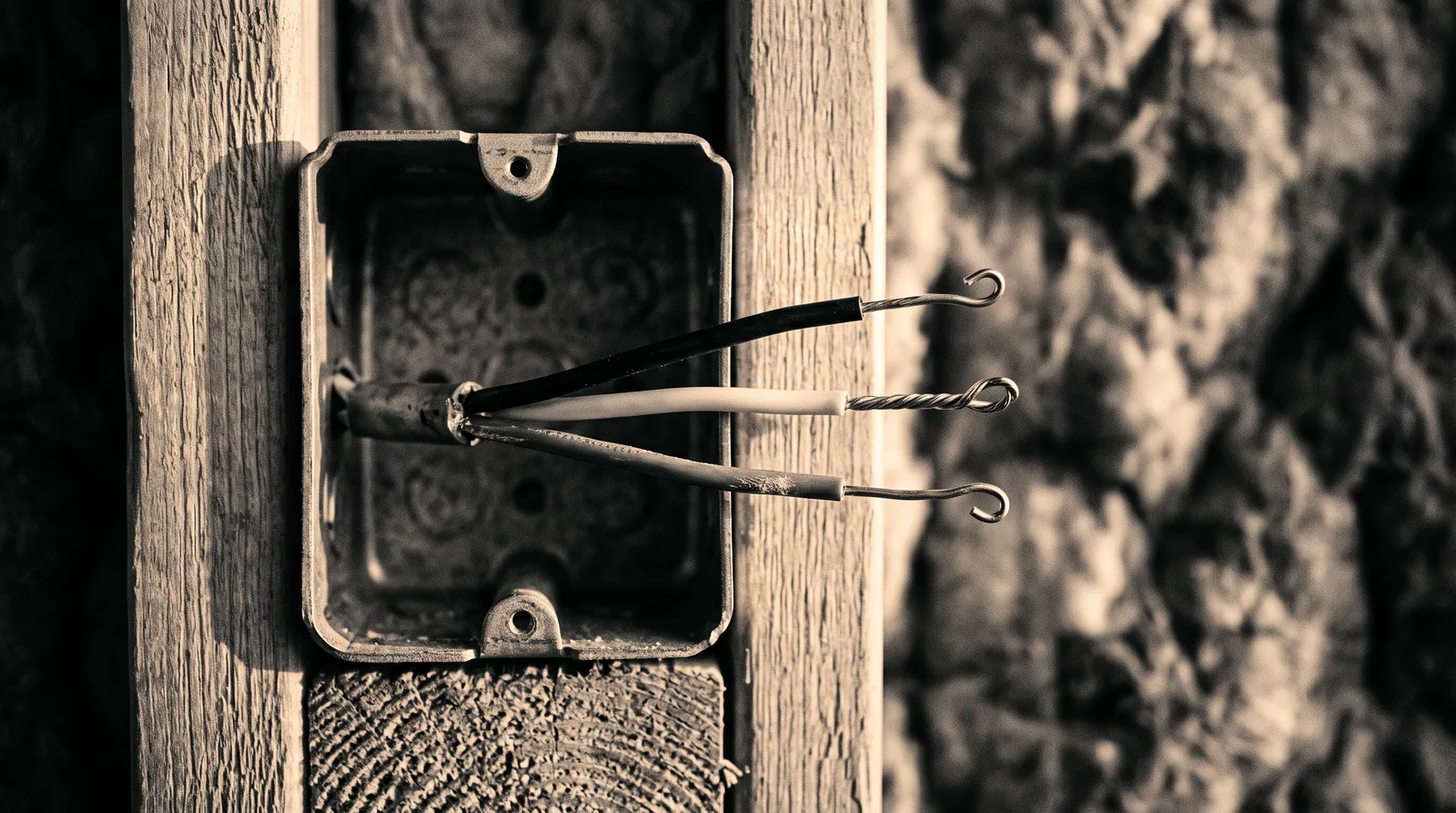
Rushing through a rough-in, people often cut wires too short, leaving themselves barely an inch of slack inside the box. The NEC requires at least 6 inches of free conductor from the point where it emerges from the cable sheathing, with at least 3 inches outside the box opening. Short wires make connections harder, increase the chance of a poor splice, and make future troubleshooting miserable. Leave yourself more wire than you think you need.
5. Not Removing Enough — or Too Much — Insulation
Strip too little insulation and you're connecting copper to plastic, not copper to copper. Strip too much and bare wire extends past the terminal, creating a shock and arc risk. The sweet spot is typically ¾ of an inch for most wire nut connections and terminal screws. Use a dedicated wire stripper with the correct gauge notch — guessing with a utility knife nicks the copper and weakens the wire.
6. Overloading a Junction Box
Every box has a cubic-inch volume rating stamped inside it, and every wire, device, and clamp that enters that box "costs" you space according to the NEC's box fill calculations. Jamming too many wires into a box that's too small creates heat buildup and makes it nearly impossible to make clean, secure connections. Before you buy a box, count your conductors. When you're between sizes, always go bigger — a deeper box costs less than a dollar more and saves you a callback.
7. Skipping the Ground — or Floating It
Grounding isn't optional, and it's not just for modern homes. The ground wire (bare copper or green) is your safety net: it gives fault current a controlled path back to the panel so the breaker can trip and protect you. Two mistakes I see here: leaving the ground unconnected entirely, or connecting it to the neutral bar in a sub-panel (where it must stay separate). In your main panel, grounds and neutrals share the same bar. In any sub-panel, they must be on separate bars. Get this wrong and you'll fail inspection — and create a real shock hazard.
The Mindset That Ties It All Together
Notice that most of these mistakes share a root cause: moving too fast and skipping the verification step. Before you close up a box, take 30 seconds to run through a mental checklist — correct gauge, one wire per terminal, enough wire length, ground connected, box fill legal. That habit alone will put you ahead of most DIYers and keep your work inspection-ready.
If you want to go deeper on any of these — box fill calculations, panel wiring, reading your local code amendments — that's exactly what we work through inside Master Electrical. Every lesson is built around the practical stuff that actually shows up on job sites and in inspection reports. Come learn it the right way.
Want to go deeper than a blog post?
Master Electrical
Learn the practical electrical skills that professionals use every day — from safely wiring outlets and panels to reading blueprints and passing inspections. No prior experience required.
Start learning — $49/mo