The Beginner's Roadmap to Acing A-Level Biology: What to Study, When, and in What Order
The Chem Examiner Academy · August 13, 2026 · 4 min read
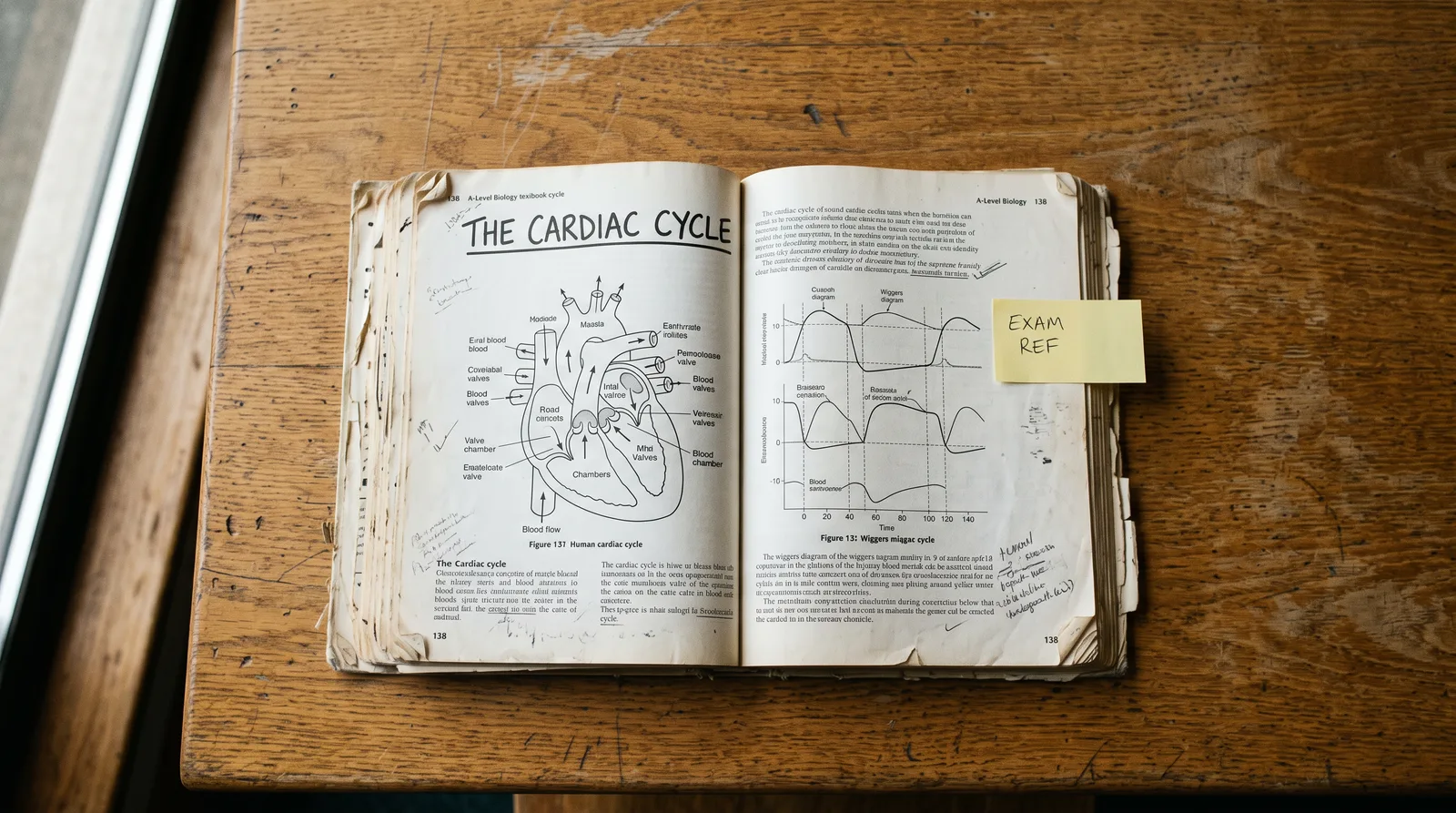
A-Level Biology has a reputation for being a subject that drowns students in content. And honestly? That reputation isn't entirely unfair. The sheer volume of vocabulary, diagrams, and processes can make it feel like you're trying to drink from a fire hose on day one.
But here's the thing: the students who struggle most aren't the ones who lack ability — they're the ones who study topics in the wrong order. They spend weeks on something low-yield in Paper 3 while barely touching the foundational material that underpins everything else. This roadmap fixes that.
Why Order Matters More Than You Think
A-Level Biology is not a flat list of equally weighted topics. Some topics appear in almost every paper, underpin multiple other units, and carry disproportionately large mark allocations. Others are important but self-contained. Study the self-contained topics first and you'll find yourself rebuilding context every time you open a new chapter. Study the foundational, high-yield topics first and everything else starts to make sense on its own.
The roadmap below is structured around three principles:
- Foundation first — concepts that make everything else easier to understand
- High-mark density early — topics that the examiner returns to again and again
- Application and stretch last — synoptic and practical-based content that requires the earlier layers to be solid
Phase 1: Lay the Biological Foundation (Weeks 1–4)
Start here, even if your class hasn't started here.
Biological molecules is the single most important topic to master early. Carbohydrates, lipids, proteins, nucleic acids — these four groups appear in questions about digestion, cell signalling, DNA replication, enzyme action, transport, and immunity. If you don't know the monomer-polymer relationships cold, you will keep hitting walls throughout the year.
Alongside biological molecules, nail cell structure (prokaryotic vs eukaryotic, organelle functions) and cell transport (diffusion, osmosis, active transport, co-transport). These topics are foundational, frequently examined, and surprisingly easy to score full marks on once you know exactly what the mark scheme wants — which usually means precise language, not vague descriptions.
Enzymes complete Phase 1. Understand the mechanism at the molecular level, know the difference between competitive and non-competitive inhibition, and practise drawing and interpreting enzyme activity graphs. Graph interpretation is a skill the examiner will test repeatedly throughout the course.
Phase 2: Build Upward with High-Yield Content (Weeks 5–10)
With your foundation solid, move into the topics that carry the heaviest mark weight across Papers 1, 2, and 3.
DNA, genes, and protein synthesis — transcription, translation, the genetic code, and gene expression. This is a topic where precision of language earns or loses marks. Words like "complementary base pairing," "anticodon," and "post-translational modification" need to be in your active vocabulary, not just your passive recognition.
Cell division (mitosis and meiosis) and genetics (monohybrid and dihybrid crosses, codominance, sex-linkage, chi-squared tests) come next. These topics are mathematically testable, which means they're actually mark-friendly once you have a reliable method. Work through past paper genetics questions until the cross diagrams feel automatic.
Biodiversity and classification is often left too late. It's not glamorous, but it's reliably examined and rewards students who bother to learn it properly.
Phase 3: Systems and Processes (Weeks 11–18)
Now you're ready for the bigger, more complex systems.
- Gas exchange and transport (the heart, haemoglobin, the cardiac cycle, ventilation mechanisms)
- Immunity (innate and adaptive responses, antibody structure, vaccination — another high-yield area)
- Photosynthesis and respiration — learn these in parallel because their biochemical stages mirror and contrast each other in ways that help both stick
Photosynthesis and respiration are notoriously detail-heavy. For each stage, learn: the location, the inputs, the outputs, and the ATP yield. That four-part framework answers the majority of examiner questions on these topics.
Phase 4: Application, Synoptic, and Practical Skills (Weeks 19–24)
The final phase is about connecting and applying what you know.
Homeostasis, hormonal communication, and the nervous system require you to draw on your earlier knowledge of cell biology and protein structure — which is exactly why they're placed here.
Ecology and inheritance, selection, and evolution round out the content, and both are frequently used as synoptic contexts in Paper 3 essays and extended-response questions.
Spend the last portion of this phase on practical skills: planning experiments, interpreting data, evaluating methodology, and calculating statistical tests. These skills don't require new biological knowledge — they require practice with past papers, which is exactly what you should be doing by this point.
One Final Rule: Start Past Papers Earlier Than You Think
Don't wait until you've "finished" the content to touch past papers. From Phase 2 onward, use past paper questions topic-by-topic after each section. The examiner has a very specific vocabulary and a very specific mark scheme logic. The earlier you get familiar with both, the fewer marks you'll leave on the table when it counts.
The content is learnable. The order is the shortcut.