Strategic Intent vs. Operational Reality: Why Most Government Plans Fall Apart at Execution
TSThe Strategic Vault Academy · August 1, 2026 · 4 min read
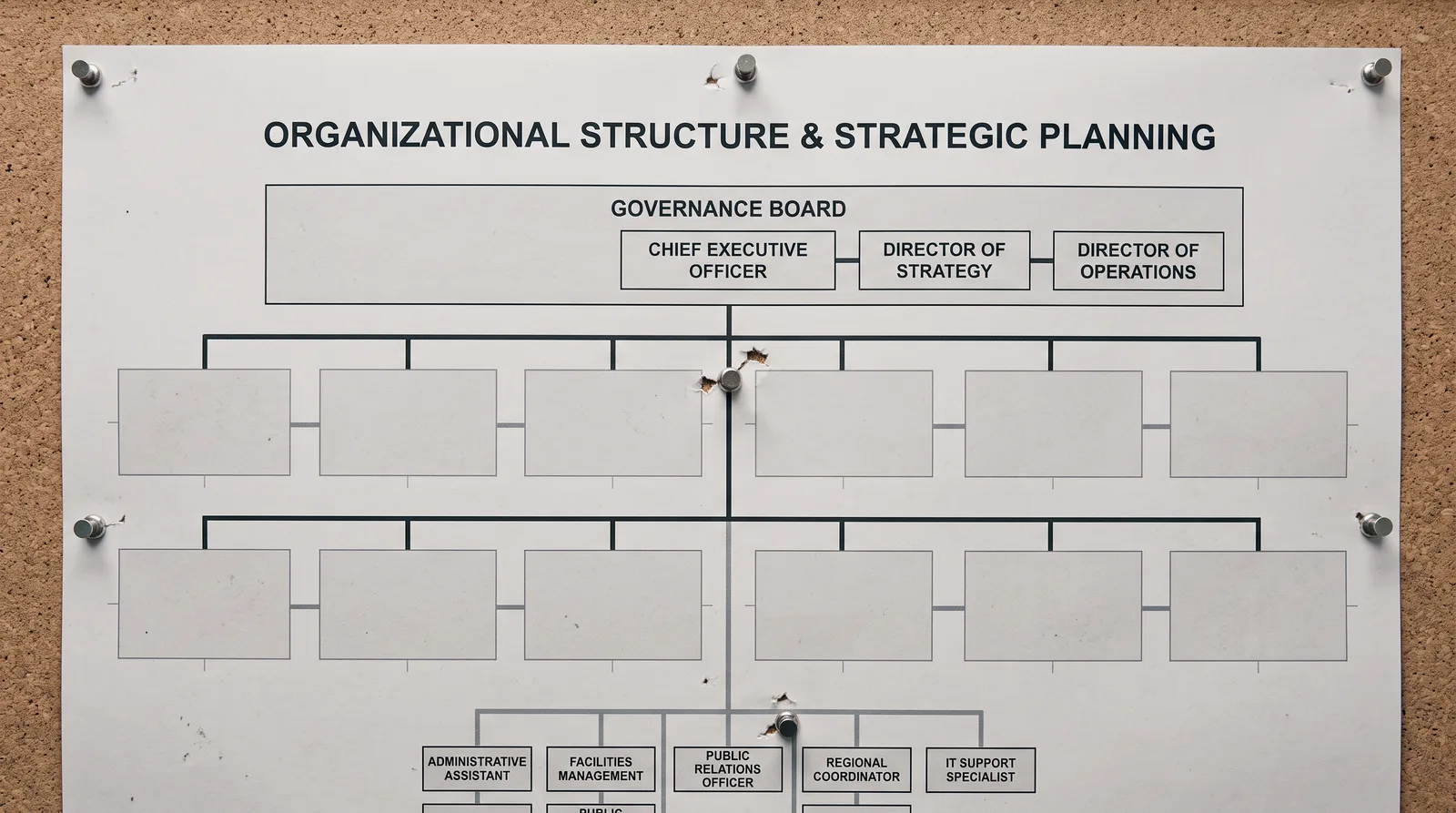
Every government strategic plan I have ever seen opens with some version of the same promise: We will deliver efficient, equitable, responsive services that advance the public good. The language is careful. The formatting is polished. Leadership signs off. The document gets posted to the agency website.
And then, six months later, almost nothing has changed at the operational level.
I want to be precise about why this happens — because it is not laziness, and it is not incompetence. Most of the public sector leaders I work with are genuinely committed to the outcomes their agencies promise. The failure almost always lives somewhere else: in the translation layers that are supposed to exist between strategic intent and front-line action, but don't.
What a Translation Layer Actually Is
Think of a strategic plan as a destination on a map. Knowing where you want to go is real and necessary. But it does not tell your team which roads are closed, who drives which vehicle, or what to do when the bridge is out.
A translation layer is any artifact, process, or accountability structure that converts a high-level goal into a specific, ownable action at the next level down. In a well-designed execution system, you have at least three of them:
- Portfolio-level priorities — which initiatives actually get resourced this fiscal year, ranked and bounded
- Operational work plans — team-level deliverables, owners, milestones, and dependencies mapped against those priorities
- Feedback loops — structured check-ins that surface reality back up to leadership before problems calcify
When any one of these is missing, the strategic plan floats. It becomes aspirational decoration rather than a governing document.
The Most Common Break Point
In my experience, the break most often happens between layers one and two — between the portfolio of strategic priorities and the actual work plans of operational teams.
Here is what it looks like in practice: A deputy director leaves an executive retreat with five agency priorities clearly in mind. She briefs her division managers. They nod. They return to offices already full of existing workload, compliance deadlines, and staffing gaps. Without a structured process to map the new priorities onto current capacity and re-sequence existing work, managers default to what was already in motion. Not because they disagree with the strategy — but because no one built the bridge.
The strategic intent was real. The operational reality was also real. Nobody translated between them.
A Simple Diagnostic You Can Run Right Now
Before you invest in a new planning process, run this three-question audit on your current strategy:
1. Can every team lead name the one or two strategic priorities that directly govern their work this quarter? Not the full list of five or seven priorities. The specific ones that should be shaping their team's decisions right now. If the answers vary wildly across your division, you have a translation gap.
2. Does each of those priorities have a named owner below the director level? Ownership at the top is necessary but not sufficient. If the only person accountable for a priority sits in the executive suite, it will not move. It needs a mid-level owner with authority, capacity, and a visible 30/60/90-day milestone set.
3. When front-line reality contradicts the plan, how does that information get back to leadership? This is the feedback loop question. If the honest answer is "it usually doesn't, unless something breaks badly," your translation system is one-directional — which means it is functionally broken.
What Strong Translation Looks Like
Agencies that execute well do not have better strategies. They have more deliberate architecture between the strategy and the work. A few things I consistently see in high-execution environments:
- Priority briefs — one-page documents that connect each strategic goal to a specific operational objective, success indicators, and resource commitments for the current cycle
- Structured capacity conversations — before any new initiative launches, managers and directors explicitly negotiate what comes off the plate, not just what gets added
- Standing execution reviews — short, recurring leadership touchpoints focused not on status updates but on obstacles, decision needs, and resource conflicts
None of this is exotic. The discipline is in doing it consistently and treating the artifacts as living documents rather than compliance checkboxes.
The Real Cost of the Gap
When strategic intent and operational reality stay disconnected, the consequences compound. Teams lose confidence in planning processes because plans never seem to change anything. Leaders lose visibility into execution problems until they become crises. And the agency loses the institutional trust that comes from consistently delivering on its public commitments.
Closing this gap is not about adding more planning. It is about building better connective tissue — the translation layers that turn a direction into a decision, and a decision into a result.
If you recognized your agency in any of this, that diagnostic above is a good first step. And if you want to go further — building the actual artifacts, auditing your current execution architecture, and designing a 30/60/90-day action plan that sticks — that is exactly what we do inside The Strategic Vault Academy.

Want to go deeper than a blog post?
The Strategic Vault Academy
A nine-module coaching program that helps mid- to senior-level public sector leaders close the gap between strategic intent and operational reality — co-designing real artifacts, audits, and 30/60/90-day action plans along the way.
Start learning — $10 · 30 days access